
Introduction to Blending Essential Oils
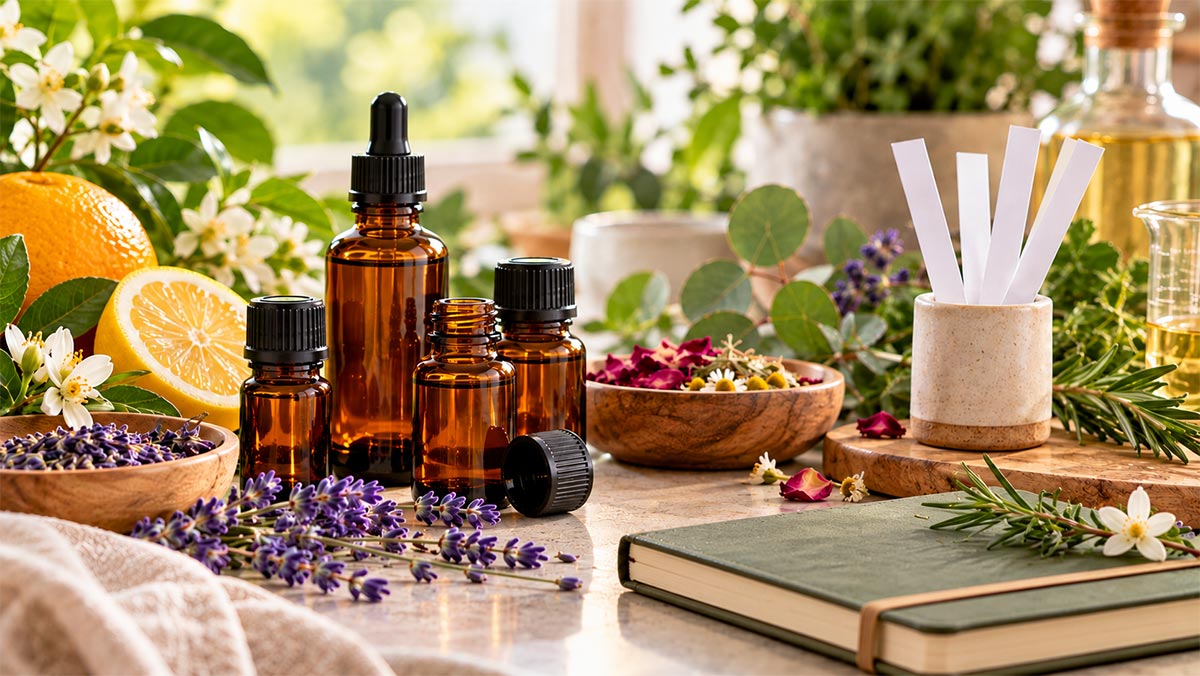
Creating your own essential oil blends is one of the most enjoyable and rewarding aspects of aromatherapy.
Essential oils can be combined to create blends that are more complex and appealing than a single essential oil used on its own. Blends can be created simply for aromatic enjoyment or formulated with particular synergistic therapeutic goal(s) in mind.
Successful essential oil blending involves more than combining oils that smell good together. The aroma, strength and characteristics of each essential oil can influence the overall blend.
Some essential oils make an immediate impression while others emerge more gradually or help provide depth and staying power.
There is no quick formula for creating a beautiful or effective essential oil blend.
Learning about aromatic notes and classifications, experimenting with different combinations and evaluating your blends carefully can help you develop your blending skills and discover combinations that you enjoy and find beneficial.
The guides below introduce the fundamentals of essential oil blending and explore aromatic blending, therapeutic blending, working with thick aromatic oils, making substitutions, evaluating aroma and other important considerations.
Explore the world of blending essential oils by reading the below articles:
Aromatherapy Blending Guide:
- Part 1: Introduction to Blending Essential Oils (You Are On This Page Now)
- Part 2: Aromatic Blending of Essential Oils
- Part 3: Formulating Masculine/Earthy Aromatherapy Blends
- Part 4: Therapeutic Blending of Essential Oils
- Part 5: Working With and Blending Thick Aromatic Oils
- Part 6: How to Substitute Essential Oils in Aromatherapy Recipes and Blends
- Part 7: Safely Diluted Essential Oil Blends May Seem Weak At First
- Part 8: Guide to Evaluating the Aroma of an Essential Oil
See Also:
