Seasonal Affective Disorder, Winter Blues and Essential Oils
Table of Contents:
- Introduction
- What Is Seasonal Affective Disorder (SAD)?
- What Are the Winter Blues?
- SAD vs. Winter Blues: What Is the Difference?
- Signs and Symptoms of Seasonal Depression
- Why Does SAD Occur?
- What Helps Seasonal Affective Disorder?
- Can Essential Oils Help with SAD or Winter Blues?
- What Does Research Say About Aromatherapy and Depression?
- Essential Oils for Wintertime Emotional Support
- Choosing Essential Oils That Are Right for You
- How I Use Essential Oils on Gloomy Winter Days
- Explore Recipes for Winter Blues Essential Oil Blends
- Ways to Enjoy Aromatherapy During Winter
- Other Supportive Practices for the Darker Months
- Essential Oil Safety and Mental Health Precautions
- Frequently Asked Questions
- Final Thoughts
- References
Introduction
As the days grow shorter and the weather becomes colder, some people begin to notice changes in their mood, energy and motivation. They may feel unusually tired, less enthusiastic about their favorite activities or simply find it harder to maintain a positive outlook.
These seasonal changes are commonly described as the "winter blues." For some individuals, the symptoms are more persistent and severe and may be associated with Seasonal Affective Disorder (SAD), a recurring form of depression.
Aromatherapy and the responsible use of essential oils can offer a pleasant, comforting and supportive way to brighten an otherwise gloomy winter day.
For example, Sweet Orange Essential Oil is often used for its uplifting properties, Bergamot Essential Oil may help promote a more positive outlook, and Lavender Essential Oil is valued for its calming and relaxing effects. Incorporating these essential oils into your daily routine may help make difficult winter days feel a little more manageable.
Although clinical studies have not established that essential oils can treat SAD, research into aromatherapy and depressive symptoms has produced some encouraging findings. Aromatherapists have also shared their experiences and recommendations for using essential oils to support emotional well-being during the winter months.
This AromaWeb guide provides a brief overview of the differences between SAD and the winter blues, what research reveals about aromatherapy and mood, and which essential oils may be worth exploring for complementary emotional support.
Essential oils are not substitutes for appropriate medical or mental health care, but they may have a welcome place in a broader approach to wintertime self-care.
What Is Seasonal Affective Disorder (SAD)?
Seasonal Affective Disorder (SAD), also called seasonal depression or winter depression, describes recurring episodes of depression that follow a seasonal pattern. Symptoms most commonly begin during autumn or winter and improve during spring. A less common form occurs during the warmer months.1,2
The Diagnostic and Statistical Manual of Mental Disorders, Fifth Edition, Text Revision (DSM-5-TR) identifies this recurring pattern with the specifier "with seasonal pattern." The criteria consider whether mood episodes follow a consistent seasonal cycle over at least two years. SAD is not classified as a separate psychiatric diagnosis.1
A qualified healthcare professional can determine whether symptoms indicate seasonal depression or another condition. It is important to seek help for persistent or worsening symptoms rather than waiting for them to recur over multiple winters.
What Are the Winter Blues?
"Winter blues" is an informal expression for milder feelings of low mood, sluggishness or discouragement during the colder, darker months. It is not a formal psychiatric diagnosis. Someone may miss daylight, feel less motivated to go outdoors or notice a temporary drop in energy without having a depressive disorder.
The phrase can be useful in everyday conversation, but it should never minimize ongoing suffering. If feelings of sadness, exhaustion or disinterest persist, worsen or interfere with daily life, it is appropriate to speak with a healthcare professional.
For practical aromatherapy ideas for milder winter or holiday blues, see AromaWeb's Aromatherapy Tips for the Winter Blues and Holiday Blues, which focuses on ways to incorporate essential oils into a supportive winter self-care routine.
SAD vs. Winter Blues: What Is the Difference?
| Winter blues | Seasonal Affective Disorder |
|---|---|
| Informal description of seasonal low mood | Depressive episodes occurring in a recurring seasonal pattern |
| Often milder and less disruptive | Can significantly affect everyday functioning and relationships |
| Not a formal diagnosis | Requires professional assessment of a mood disorder and seasonal pattern |
| May improve with ordinary adjustments and time | May require professional care |
Signs and Symptoms of Seasonal Depression
According to the National Institute of Mental Health (NIMH), winter-pattern SAD may involve depressive symptoms along with changes in sleep, appetite and energy.2 Possible symptoms include:
- Persistent sadness, emptiness or hopelessness
- Reduced enjoyment of activities that previously felt rewarding
- Low energy, fatigue or difficulty concentrating
- Sleeping more than usual or finding it unusually hard to get up
- Increased appetite, carbohydrate cravings or weight gain
- Social withdrawal and difficulty carrying out daily responsibilities
- Feelings of worthlessness, guilt or thoughts of death or suicide
Not everyone experiences all of these symptoms. Summer-pattern SAD may involve different features, such as difficulty sleeping, reduced appetite and agitation.2 Thoughts of self-harm or suicide should always be taken seriously; crisis resources are provided in the safety section below.
Why Does Seasonal Affective Disorder Occur?
Researchers are still investigating why some people are especially sensitive to seasonal changes. Shorter daylight hours and changes in light exposure may affect the timing of the body's internal clock, or circadian rhythm, and the regulation of sleep and wakefulness. Melatonin and serotonin are also among the biological systems being studied.2
Seasonal Affective Disorder is not simply a matter of needing a more cheerful attitude. In the United States, winter-pattern SAD is more common in northern locations, though seasonal depression can occur elsewhere.2
What Helps Seasonal Affective Disorder?
The evidence-based options described by NIMH include bright light therapy, psychotherapy and medication. Treatment choices depend on personal circumstances and should be discussed with a qualified clinician.2
Research has also shown promising results for cognitive behavioral therapy specifically adapted for Seasonal Affective Disorder (CBT-SAD). NIMH notes that CBT-SAD and light therapy have shown comparable effectiveness in improving SAD symptoms.2 In a study that followed participants for two winters after treatment, those who received CBT-SAD were less likely to experience a recurrence of depression during the second winter than those who received light therapy.3
Can Essential Oils Help with Seasonal Affective Disorder or the Winter Blues?
Aromatherapy may offer a valuable form of complementary emotional support during the challenging winter months. Some people find that incorporating specific essential oils into their daily routines helps them feel more positive or provides a welcome sense of peace and calm when the winter blues set in.
Professional aromatherapists have long discussed the potential emotional benefits of essential oils during the darker months. In the Alliance of International Aromatherapists' journal Aromatics in Action, Naomi Joy explores seasonal depression and shares aromatic approaches intended to provide emotional support.4 Annette Davis, Jennifer Pressimone and other contributors to the NAHA Aromatherapy Journal have also published seasonal aromatherapy recommendations.12,13,16
Research on aromatherapy and depressive symptoms offers additional encouragement. Several clinical studies have reported improvements in mood-related measurements following essential oil inhalation or aromatherapy massage.5,6,7,8,9 However, these studies generally have not involved people specifically diagnosed with Seasonal Affective Disorder.
The clinical research reviewed for this article does not establish that essential oils can treat or prevent Seasonal Affective Disorder.
For those experiencing mild winter blues, incorporating essential oils into a self-care routine through diffusion, personal aromatherapy inhalers or properly diluted topical roll-ons may provide beneficial emotional support.
Aromatherapy should complement, rather than replace, appropriate professional mental health care when needed.
What Does Research Say About Aromatherapy and Depression?
Although researchers have not established aromatherapy as a treatment for SAD, several studies investigating essential oils and depressive symptoms have produced promising results. Lavender Essential Oil and Bergamot Essential Oil are particularly interesting because they have been included in human clinical studies.6,8,9 The following research provides some insight into why aromatherapy may be worth considering for complementary emotional support.
2017: Review of 12 Randomized Trials
Sánchez-Vidaña and colleagues reviewed 12 randomized controlled trials of aromatherapy for depressive symptoms. Seven reported improvements. The review found more consistent benefits for aromatherapy massage than inhalation, but noted substantial variation among interventions and that half of the included trials received low methodological quality scores.5 This does make it difficult to isolate the effect of the essential oils from massage or other factors.
2020: Systematic Review of Lavender and Depression
Jafari-Koulaee and colleagues reviewed nine studies investigating Lavender Essential Oil and depression. Some reported favorable outcomes, but results were mixed and populations and methods differed. The review supports further investigation.6
2023: Larger Meta-analysis
A 2023 meta-analysis by Cho and Kim considered 32 randomized trials from 27 studies and reported a moderate overall association between aromatherapy and reduced depressive symptoms. Inhalation and blends performed favorably in the pooled analysis, although effectiveness differed among populations.7
2022 and 2025: Trials Involving Lavender and Bergamot
A 2022 randomized controlled study of 132 postmenopausal women investigated inhalation of a Lavender-Bergamot essential oil blend, with depression assessed as a secondary outcome. The aromatherapy-only group had a lower depression score than the routine-care/placebo group at the end of treatment.8
In a 2025 randomized trial involving 100 adults receiving substance-use-disorder treatment, participants offered Bergamot Essential Oil inhalation alongside usual care reported improvements in depressive symptoms and anxiety measures over seven days.9
Although these studies did not specifically investigate SAD, their findings are encouraging and suggest that aromatherapy may offer beneficial emotional support for some individuals. Additional research will help us better understand the potential of individual essential oils and how they may be incorporated into complementary approaches to emotional well-being.
Essential Oils for Wintertime Emotional Support
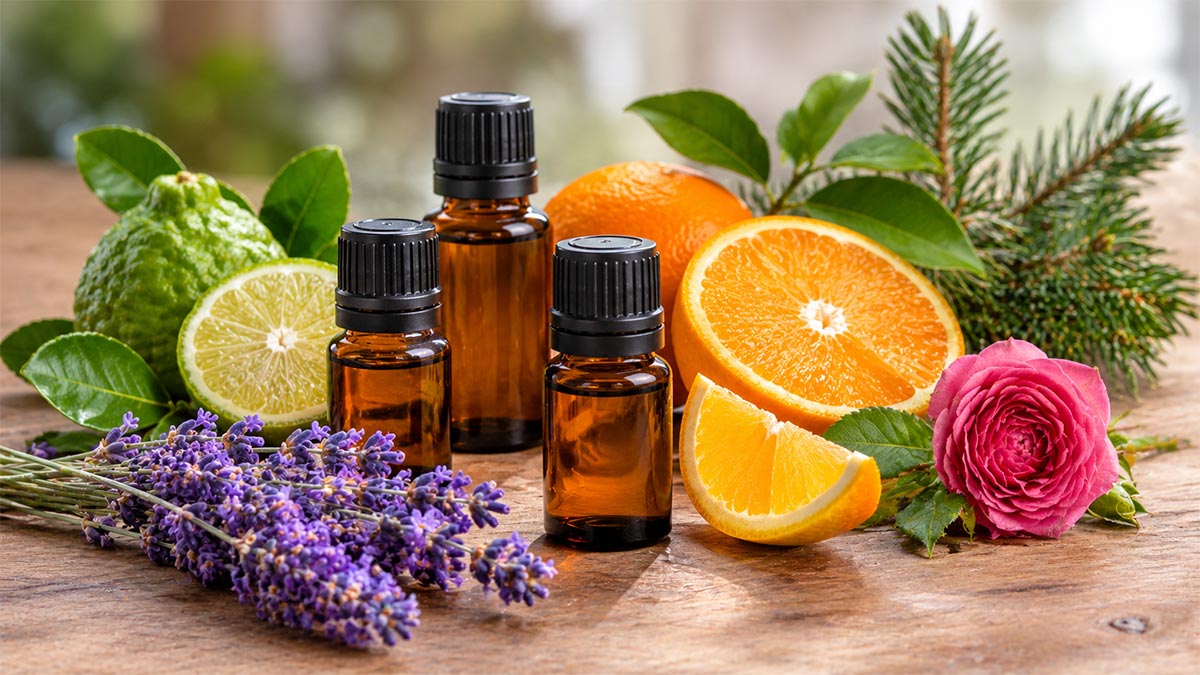
The following essential oils are among those worth considering for wintertime emotional support. Some have been investigated in human clinical studies involving mood and depressive symptoms, while others have been recommended by experienced aromatherapists for their potential to promote relaxation, uplift mood or provide emotional support. Personal preferences vary, so consider which essential oils may best suit your individual needs and preferences.
Lavender Essential Oil (Lavandula angustifolia)
Lavender Essential Oil is a logical starting point because of its long history of use for relaxation and emotional support, and because human studies have investigated it for depressive symptoms. The 2020 systematic review found mixed but sometimes favorable results, and it was included with bergamot in the 2022 trial of postmenopausal women.6,8 It may be worth considering when a calming essential oil is desired, particularly as part of an evening routine.
Bergamot Essential Oil (Citrus bergamia)
Bergamot Essential Oil combines a bright citrus aroma with delicate floral and bittersweet notes. Bergamot has been investigated in human clinical research. A 2025 randomized trial examined Bergamot Essential Oil inhalation, while a 2022 trial tested a lavender-bergamot blend and measured depression-related outcomes.8,9 Tricia Ambroziak also describes Amy Kreydin's use of bergamot hydrosol for SAD in the Summer 2023 NAHA journal.10 The observation pertains to a hydrosol, not the essential oil. Cold pressed Bergamot Essential Oil is phototoxic when used on the skin.
Sweet Orange Essential Oil (Citrus sinensis)
Sweet Orange Essential Oil appears in winter-focused formulations published by both Naomi Joy and Jennifer Pressimone.4,16 These professional recommendations support its inclusion among the essential oils worth considering for wintertime emotional support. Its bright citrus aroma is an additional characteristic that many people find appealing.
Rose Otto Essential Oil (Rosa × damascena)
Rose Otto Essential Oil or Rose Absolute has a long association with emotional support and is often valued in aromatherapy when comfort and emotional nurturing are desired. Rose appears in studies summarized in the 2017 aromatherapy and depression review.5 Sharon Falsetto also explores Rose's emotional applications in Rose: A Favorite Floral for Winter Woes in the Winter 2018 NAHA journal.11
Geranium Essential Oil (Pelargonium graveolens)
Geranium Essential Oil appears in Naomi Joy's Winter Light blend, and she discusses Geranium in relation to situational stress and anxiety.4 Its aroma is characteristically rosy, green and floral.
Clary Sage Essential Oil (Salvia sclarea)
Clary Sage Essential Oil offers a warm, herbaceous and softly sweet aroma. Annette Davis includes it in Winter Blues blends published by NAHA in 2013 and 2016.12,13 An experimental study of Salvia sclarea reported antidepressant-like effects in rats. Animal findings do not establish benefit for people with depression, but they support further investigation.14
Neroli and Petitgrain Essential Oils (Citrus aurantium)
Neroli Essential Oil, distilled from bitter orange blossoms, has a complex sweet floral aroma. Petitgrain Essential Oil, generally distilled from the leaves and twigs of bitter orange, has a greener, fresher character. Annette Davis lists Neroli or Petitgrain as options in her 2016 Winter Blues Blend.13
Vetiver Essential Oil (Chrysopogon zizanioides)
Vetiver Essential Oil has a deep, earthy and woody aroma. Naomi Joy includes Vetiver in her Winter Light blend and discusses its potential for emotional support, while Annette Davis includes Vetiver in her 2013 Winter Blues Blend.4,12
Atlas Cedarwood Essential Oil (Cedrus atlantica)
Atlas Cedarwood Essential Oil is another professional selection worth considering for wintertime blends, as Annette Davis includes it in her 2013 Winter Blues Blend.12 It has a soft, warm woody aroma. Consider sourcing and conservation information when choosing any wood-derived essential oil.
Balsam Fir Essential Oil (Abies balsamea)
Balsam Fir Essential Oil has a recognizable evergreen aroma that may bring to mind wooded landscapes in winter. In NAHA's Winter 2022 journal, Sharon Falsetto Chapman cites Suzanne Catty's use of Balsam Fir Hydrosol for SAD.15 However, this recommendation pertains specifically to Balsam Fir Hydrosol, not Balsam Fir Essential Oil.
A Note About Seasonal Blend Recipes in the Professional Literature
NAHA has published several Winter Blues recommendations, including Annette Davis's contributions in Winter 2013 and Winter 2016 and Jennifer Pressimone's winter-themed topical formulation in Winter 2021.12,13,16
Choosing Essential Oils That Are Right for You
The essential oils that you find most beneficial for emotional support may be quite different from those preferred by someone else. One person may respond especially well to Bergamot Essential Oil, while another may find Rose Otto Essential Oil or Rose Absolute, Lavender Essential Oil or Vetiver Essential Oil more supportive. Personal experience, individual needs and associations with particular aromas can all influence how you respond to an essential oil. An oil that is commonly described as "uplifting," calming or grounding will not necessarily have that effect for everyone, so it is worthwhile to pay attention to which essential oils seem most beneficial for you.
How I Use Essential Oils on Gloomy Winter Days
Over the years, I have come to recognize which essential oils I personally find most helpful during dark, gloomy winter days. When I want something that feels invigorating and uplifting, I often reach for Rosemary Essential Oil, Ginger Essential Oil, Cinnamon Essential Oil and a selection of citrus essential oils and conifer essential oils. I tend to incorporate these oils into diffuser blends and personal aromatherapy inhalers, particularly during the daytime when winter weather and limited daylight leave me feeling sluggish or less motivated.
At other times, especially in the evening or during particularly stressful moments during the day, I tend to favor essential oils that I personally find calming and emotionally settling. These include Lavender Essential Oil, Bergamot Essential Oil, Bergamot Mint Essential Oil, Clary Sage Essential Oil, Neroli Essential Oil and Petitgrain Essential Oil. Again, I most often use these in a diffuser or personal inhaler, depending on the situation.
These are my own personal preferences and experiences, not a formula that I expect to work the same way for everyone. Individual responses to essential oils can vary considerably, and there is no specific research demonstrating that the particular oils that benefit me will provide the same effects for someone else. Part of aromatherapy is learning which essential oils and blends best suit your own needs and circumstances.
Although inhalation is my primary approach for this purpose, I sometimes prepare topical blends as well. When I do, I use only essential oils that are appropriate for topical application and follow safe dilution levels and oil-specific precautions. See AromaWeb's Essential Oil Safety Guide for important safety information.
Explore Recipes for Winter Blues Essential Oil Blends
If you'd like to put some of these essential oils into practice, visit AromaWeb's Recipes for Winter Blues Essential Oil Blends. The page features make-your-own blends using many of the essential oils discussed above, including a blend inspired by Annette Davis's published Winter Blues formulation.
Ways to Enjoy Aromatherapy During Winter
Essential Oil Diffusion
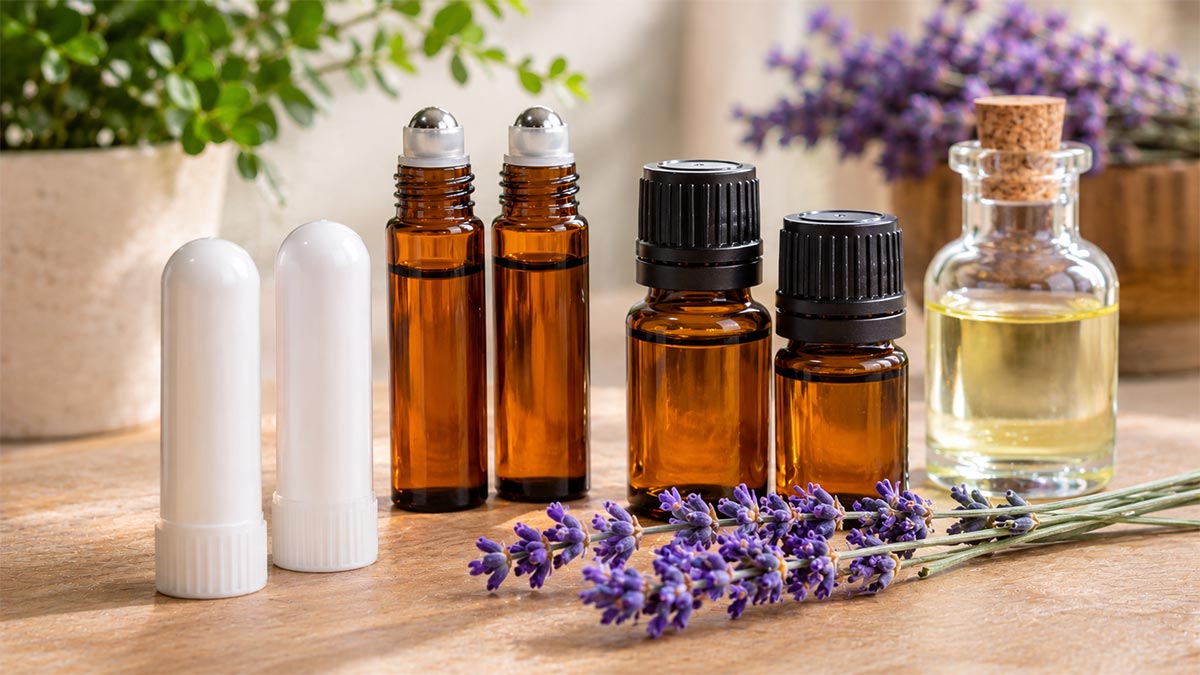
Diffusing essential oils is a convenient inhalation method that can be incorporated into your routine while relaxing, reading, working or enjoying other activities at home. Essential oils such as Sweet Orange and Bergamot may be useful when an uplifting or invigorating effect is desired, while Lavender, Cedarwood Atlas and Vetiver are among the oils that may be considered when seeking a calmer, more grounding mood.
Use a diffuser intermittently according to the manufacturer's instructions, maintain adequate ventilation and consider the safety and comfort of other people and pets in the home. See AromaWeb's Essential Oil Diffuser Safety Tips.
Personal Aromatherapy Inhalers
Personal aromatherapy inhalers are particularly useful when you want to use an essential oil or blend without diffusing an entire room or area. Personal inhalers are portable, discreet and make it easy to incorporate the benefits of essential oils into your daily routine, even when you're away from home.
Learn more in AromaWeb's Guide to Personal Aromatherapy Inhalers.
Essential Oil Roll-Ons
An aromatherapy roll-on combines properly diluted essential oils with a suitable carrier oil in a convenient roller bottle. Roll-ons are especially useful if you would like to enjoy topical aromatherapy and want a portable way to benefit from your favorite essential oils.
Apply a properly formulated roll-on to a small area of skin, following appropriate dilution and oil-specific safety guidelines. Be especially mindful of phototoxicity when using expressed Bergamot Essential Oil or other phototoxic essential oils.
Aromatherapy Massage
Aromatherapy massage combines the therapeutic potential of essential oils with the physical and emotional benefits of massage. Several clinical studies have investigated aromatherapy massage for depressive symptoms, with some reporting encouraging results. However, because massage itself can help promote relaxation and emotional well-being, researchers have found it challenging to determine how much of the observed benefit can be attributed specifically to the essential oils.5 Always use appropriately diluted essential oils and follow recommended safety precautions.
Other Supportive Practices for the Darker Months
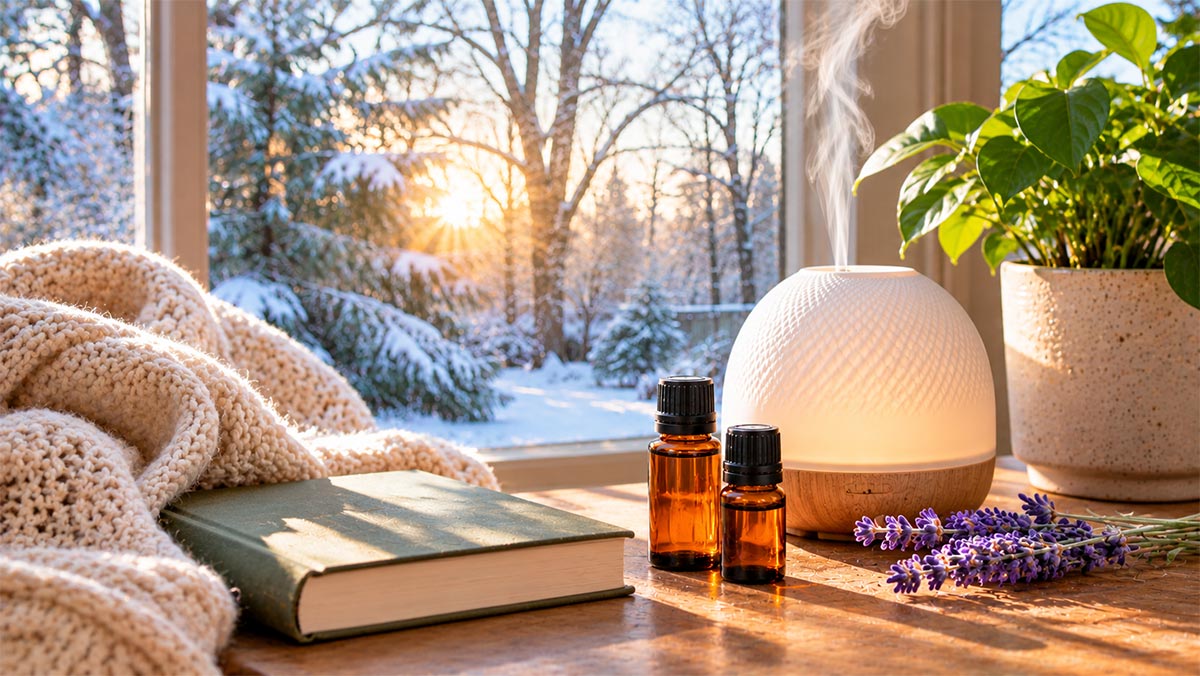
Aromatherapy can accompany a personally meaningful routine such as reading, listening to music, gentle movement or enjoying a comfortable place to sit near daylight. Time outdoors when feasible, regular sleep routines and connection with supportive people may be beneficial, but should not be presented as effortless solutions for depression. Exploring the concept of Forest Bathing may also be beneficial.
If you are struggling to keep up with your usual routine, you deserve support rather than pressure to do more. Essential oils may provide valuable complementary emotional support alongside appropriate professional care.
Essential Oil Safety and Mental Health Precautions
Important: This article is provided for aromatherapy education and is not medical or mental health advice. Essential oils should never replace professional evaluation, psychotherapy, medication, light therapy or other recommended treatments for depression or related mental health conditions.
- Seek professional help for sadness, loss of interest, exhaustion, sleep or appetite changes or symptoms that interfere with everyday life. Do not wait for another winter to ask for an evaluation.
- Do not stop or change prescribed psychiatric medication, or replace professional care with aromatherapy.
- Follow all general essential oil safety precautions as well as the safety precautions for each individual essential oil you plan to use.
If you or someone else is thinking about suicide or self-harm, seek help immediately. In the United States, call or text 988 for the Suicide & Crisis Lifeline. If there is immediate danger, call 911 or seek emergency medical care.
Frequently Asked Questions
Is Seasonal Affective Disorder the Same as the Winter Blues?
No. The "Winter blues" is informal language for generally milder seasonal low mood. SAD describes depressive episodes following a seasonal pattern. A professional should help assess symptoms and their severity.
What Essential Oils Are Best for Seasonal Depression?
No essential oil has been established as a treatment for seasonal depression. Lavender and Bergamot have relevant human research involving depressive symptoms.6,8,9 Other essential oils discussed in this guide have been recommended by experienced aromatherapists for their potential to support emotional well-being.4,11,12,13,15,16
Can Essential Oils Replace a SAD Light Therapy Box?
No. Light therapy is an established treatment option for Seasonal Affective Disorder. Aromatherapy may provide complementary emotional support, but it should not replace light therapy or other treatments recommended by a qualified healthcare professional.
Does Lavender Essential Oil Help Depression?
Clinical studies have investigated Lavender Essential Oil in relation to depressive symptoms, with mixed results.6,8 It may be pleasant or relaxing for some individuals, but it is not an established substitute for depression treatment.
Can SAD Happen in the Summer?
Yes. Although winter-pattern SAD is more commonly discussed, recurring summer-pattern depression is also recognized.2
When Should I Talk to a Healthcare Professional?
When mood changes persist, intensify or interfere with daily responsibilities, relationships or enjoyment of life. You do not need to meet a particular diagnostic label before asking for help.
Is Aromatherapy Worth Trying If I Have the Winter Blues?
If you can use essential oils safely, aromatherapy may provide a comforting and supportive addition to your self care routine. Keep expectations realistic and seek professional care if symptoms are significant or persistent.
Final Thoughts
The darker months of the year can be challenging, particularly for those who experience changes in mood, energy and motivation as the seasons change. While aromatherapy cannot replace appropriate treatment for Seasonal Affective Disorder, it may offer a complementary source of comfort and support.
For some people, a thoughtfully chosen essential oil or blend can become a meaningful part of a winter self-care routine, offering moments of calm, encouragement or renewed energy when shorter days begin to take a toll.
I hope this guide encourages you to explore the essential oils that appeal to you while remaining mindful of your emotional well-being and seeking professional support whenever needed.
References
1 American Psychiatric Association. Diagnostic and Statistical Manual of Mental Disorders, Fifth Edition, Text Revision (DSM-5-TR). American Psychiatric Association Publishing, 2022. See pp. 174-175 (seasonal pattern specifier for bipolar disorders) and p. 214 (seasonal pattern specifier for recurrent major depressive disorder).
2 National Institute of Mental Health. Seasonal Affective Disorder. U.S. Department of Health and Human Services, National Institutes of Health. NIH Publication No. 23-MH-8138. Revised 2023.
3 Rohan KJ et al. Outcomes One and Two Winters Following Cognitive-Behavioral Therapy or Light Therapy for Seasonal Affective Disorder. American Journal of Psychiatry. 2016;173(3):244-251. doi:10.1176/appi.ajp.2015.15060773.
4 Naomi Joy. "Most Wonderful Time of the Year?" Essential Oils and Seasonal Depression. Aromatics in Action, Alliance of International Aromatherapists, vol. 3, no. 4 (2020), pp. 10-13. Reprinted in vol. 4, no. 2 (June 2021), pp. 43-47.
5 Sánchez-Vidaña DI et al. The Effectiveness of Aromatherapy for Depressive Symptoms: A Systematic Review. Evidence-Based Complementary and Alternative Medicine. 2017;2017:5869315. doi:10.1155/2017/5869315.
6 Jafari-Koulaee A et al. A Systematic Review of the Effects of Aromatherapy with Lavender Essential Oil on Depression. Central Asian Journal of Global Health. 2020;9(1):e442. doi:10.5195/cajgh.2020.442.
7 Cho K and Kim M. Effects of Aromatherapy on Depression: A Meta-analysis of Randomized Controlled Trials. General Hospital Psychiatry. 2023;84:215-225. doi:10.1016/j.genhosppsych.2023.08.003.
8 Mojtehedi M et al. Effect of Aromatherapy with Essential Oil of Lavandula angustifolia Mill-Citrus bergamia and Mindfulness-Based Intervention on Sexual Function, Anxiety, and Depression in Postmenopausal Women: A Randomized Controlled Trial with Factorial Design. Iranian Journal of Nursing and Midwifery Research. 2022;27(5):392-405. doi:10.4103/ijnmr.ijnmr_129_21.
9 Reven ME et al. Using an Aromatherapy Intervention with Citrus bergamia (Bergamot) Essential Oil in Adults in Treatment for Substance Use Disorder: A Randomized Controlled Trial. International Journal of Nursing Sciences. 2025;12(4):311-319. doi:10.1016/j.ijnss.2025.04.011.
10 Tricia Ambroziak. A Fragrant Journey: Exploring Bergamot (Citrus × bergamia). NAHA Aromatherapy Journal, Summer 2023.2, pp. 35-45, especially p. 39.
11 Sharon Falsetto. Rose: A Favorite Floral for Winter Woes. NAHA Aromatherapy Journal, Winter 2018.4, pp. 9-15.
12 Annette Davis. Winter Blues Blend. NAHA Aromatherapy Journal, Winter 2013.4, p. 19.
13 Annette Davis. Winter Blues Blend. NAHA Aromatherapy Journal, Winter 2016.4, p. 62.
14 Seol GH et al. Antidepressant-like Effect of Salvia sclarea Is Explained by Modulation of Dopamine Activities in Rats. Journal of Ethnopharmacology. 2010;130(1):187-190. doi:10.1016/j.jep.2010.04.035.
15 Sharon Falsetto Chapman. The Evergreen Virtues of Balsam Fir (Abies balsamea). NAHA Aromatherapy Journal, Winter 2022.4, pp. 9-20, especially p. 13 (citing Suzanne Catty on Balsam Fir Hydrosol).
16 Jennifer Pressimone. Winter Antioxidant Nourishing Cream. NAHA Aromatherapy Journal, Winter 2021.4, p. 79.
General Safety Information
Do not take any oils internally and do not apply undiluted essential oils, absolutes, CO2s or other concentrated essences onto the skin without advanced essential oil knowledge or consultation from a qualified aromatherapy practitioner. For general dilution information, read AromaWeb's Guide to Diluting Essential Oils. If you are pregnant, epileptic, have liver damage, have cancer, or have any other medical problem, use oils only under the proper guidance of a qualified aromatherapy practitioner. Use extreme caution when using oils with children and be sure to first read the recommended dilution ratios for children. Consult a qualified aromatherapy practitioner before using oils with children, the elderly, if you have medical issues or are taking medications. Before using this or any essential oil, carefully read AromaWeb's Essential Oil Safety Information page. For in-depth information on oil safety issues, read Essential Oil Safety by Robert Tisserand and Rodney Young.
Shelf Life
Important Information About the Profiles
The essential oil information provided on AromaWeb is intended for basic educational purposes only. The references to safety information, test results, constituents and percentages is generalized information. Essential oils can vary greatly in composition. The data is not necessarily complete and is not guaranteed to be accurate. The essential oil photos are intended to represent the typical and approximate color of each essential oil. However, essential oil composition and color can vary based on harvesting, distillation, age of the essential oil and other factors. Profiles for several CO2 Extracts and absolutes are included within the directory, and are denoted as such.
Essential Oil Book Suggestions
Essential Oil Safety
Own Safety Profiles for 400 Essential Oils and 206 Constituents
Authors: Robert Tisserand and Rodney Young
The Complete Book Of Essential Oils & Aromatherapy
Includes 125 Essential Oil Profiles
Author: Valerie Ann Worwood
Visit AromaWeb's Books area to find details about many other essential oil and aromatherapy books.