
Guaiacwood Essential Oil
Plectrocarpa sarmientoi
(Synonyms: Bulnesia sarmientoi / Gonopterodendron sarmientoi)
Guaiacwood Essential Oil Profile Contents:
- Introduction
- Guaiacwood Essential Oil Benefits and Uses
- Aromatic Description
- Perfumery Note
- Strength of Initial Aroma
- Guaiacwood Essential Oil Blends Well With These Oils
- Color
- Consistency
- How to Work with and Blend Guaiacwood Essential Oil
- Can Guaiacwood Essential Oil Be Used in a Diffuser?
- Botanical Name
- Plant Family
- Common Method of Extraction
- Plant Part Typically Used
- Sustainability and Conservation Status
- Major Constituents of Guaiacwood Essential Oil
- Guaiacwood Essential Oil Safety Information
- Guaiacwood Essential Oil References
- General Essential Oil Safety Information
Introduction
Guaiacwood also goes by the common name of Palo Santo in some regions. Within the scope of essential oils and aromatherapy, however, this is not the same essential oil that is commonly known as Palo Santo. Be sure to verify the botanical name to ensure that you are working with the correct essential oil.

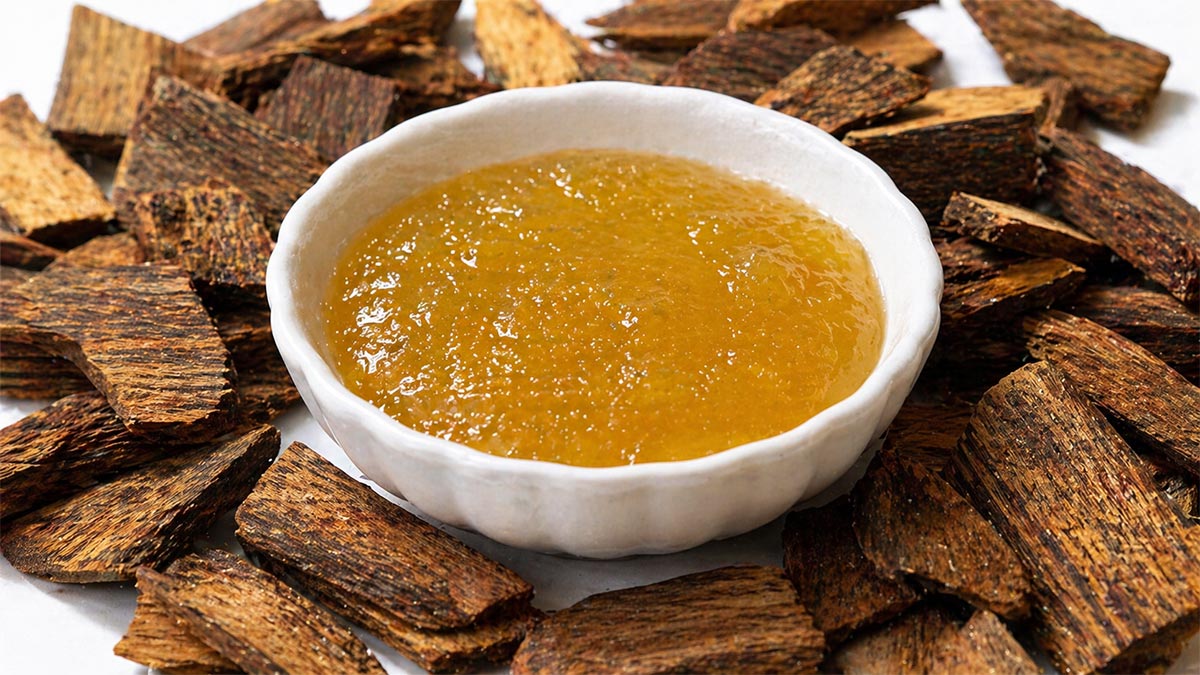
Guaiacwood Essential Oil is steam or hydro distilled from the dense wood of Plectrocarpa sarmientoi, a tree that is native to the subtropical forests of South America, particularly Paraguay.
The tree itself is slow-growing and remarkably resin-rich. It yields an essential oil that is unusually thick and semi-solid at room temperature and has a soft amber to golden hue.
Traditionally valued for both its aromatic depth and its historical use in incense and perfumery, Guaiacwood Essential Oil offers a grounding, warm profile that feels both ancient and quietly complex.
Sadly, Guaiacwood is an endangered species. See the Sustainability and Conservation Status section below for more information.
Whenever possible, purchase Guaiacwood Essential Oil from reputable suppliers that are conscientious of how they source their essential oils.
Guaiacwood Essential Oil Benefits and Uses
- Antiseptic
- Anti-inflammatory
- Arthritis
- Gout
- Rheumatism
- Rheumatoid Arthritis
- Stress
- Anxiety
- Meditation
- Natural Perfumery
- Fragrance Fixative
Sources: Please refer to the Guaiacwood Essential Oil References section.
Aromatic Description
Guaiacwood Essential Oil smells sweet, creamy, balsamic and slightly floral with earthy and smoky undertones.
Steffen Arctander tells us this:
"...apart from its delicately sweet, rosy-woody odor which is often referred to as 'tearose-like', the oil may have a 'smoked ham' odor which is definitely unwanted, but not uncommon. It is conceivable that this odor, which was never reported prior to World War II, occurs in oils which have been 'forced' during the distillation through the addition of mineral acid (sulfuric, etc.) to the chopped, wet wood in the still. This increases the yield of oil, but it also creates a hazard of spot-burning of the woodchips. Similar to amyris, the age of the wood prior to distillation also has some influence upon the odor of the oil." Source: Steffen Arctander, Perfume and Flavor Materials of Natural Origin (Reprint Edition. Elizabeth, NJ: Pathfinder., 2017), 284.
Perfumery Note
Base
Strength of Initial Aroma
Medium
Guaiacwood Essential Oil Blends Well With These Oils
Essential oils and absolutes that blend well aromatically with Guaiacwood Essential Oil include the following:
Color
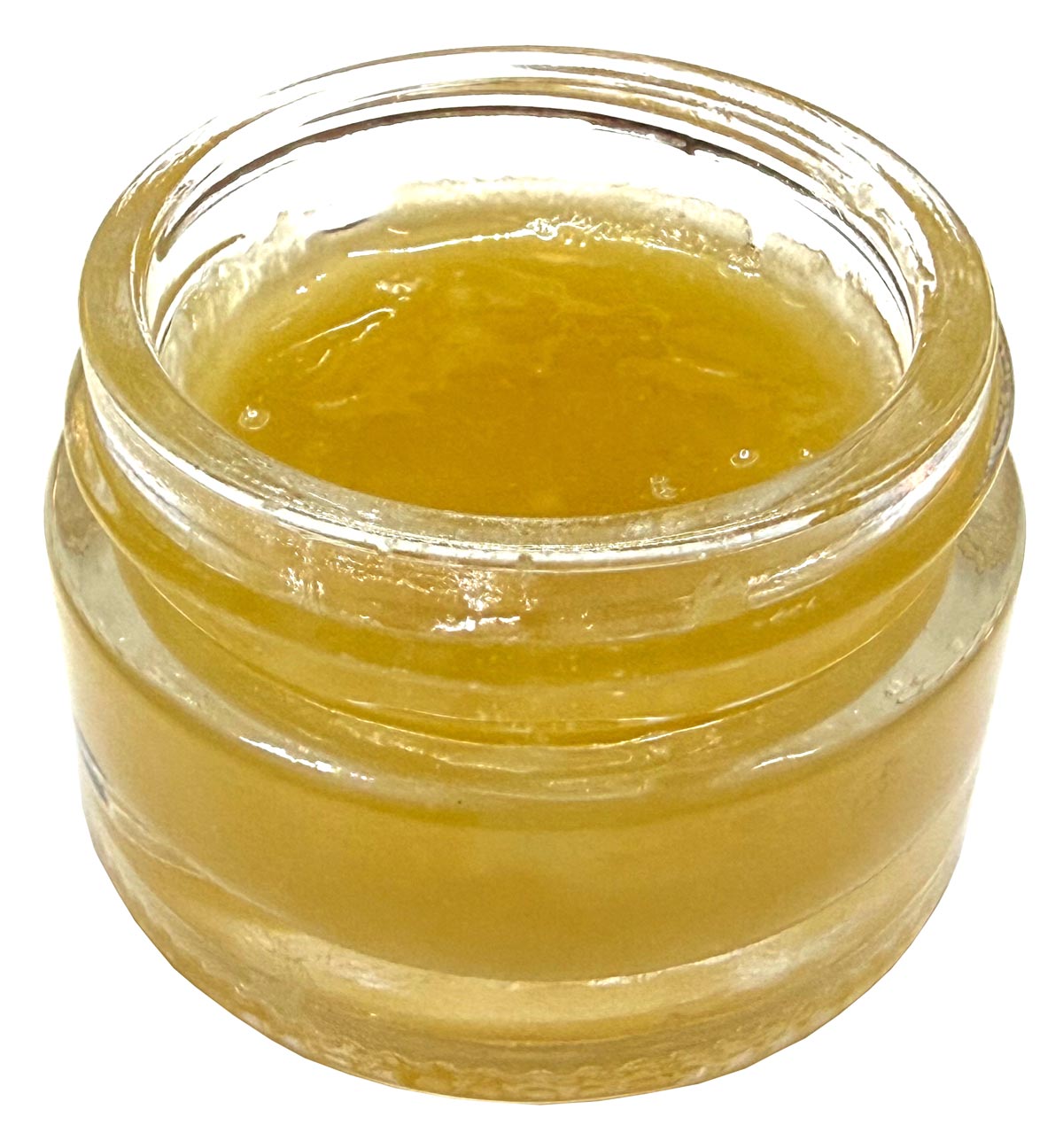
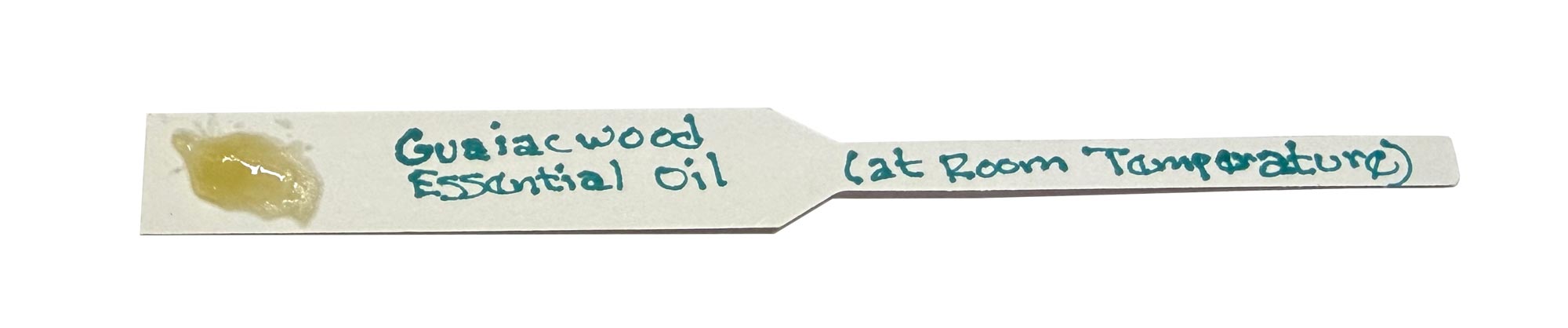
Guaiacwood Essential Oil is semi-solid at room temperature. It is caramel to light amber in color. See the Description section at the top of this profile for more details.
Consistency
Very Thick
How to Work with and Blend Guaiacwood Essential Oil
Pure, undiluted Guaiacwood Essential Oil is a very thick essential oil. It is semi-solid at room temperature.
Read AromaWeb's Guide to Using and Blending Thick Aromatic Oils to learn how to best work with Guaiacwood Essential Oil so that it can be properly blended and combined with other essential oils and ingredients.
Can Guaiacwood Essential Oil Be Used in a Diffuser?
Guaiacwood Essential Oil is too thick to be used as-is in ultrasonic and nebulizing diffusers. It can be used as-is with some passive style diffusers.
It is possible to blend Guaiacwood Essential Oil with other essential oils to achieve a thin enough blend that will be suitable for use in ultrasonic and nebulizing diffusers.
For the most accurate assistance, check the user guide that came with your particular make and model diffuser.
Botanical Name
Plectrocarpa sarmientoi
(Synonyms: Bulnesia sarmientoi / Gonopterodendron sarmientoi)
Plant Family
Common Method of Extraction
Steam or Hydro Distilled
Plant Part Typically Used
Sustainability and Conservation Status
Endangered
Source: https://www.iucnredlist.org/species/32028/68085692
Last Accessed: April 25, 2026
To learn more about the conservation status of essential oil bearing plants and how to use the IUCN Red List of Threatened Species, please refer to AromaWeb's Guide to Essential Oils and Sustainability.
Major Constituents of Guaiacwood Essential Oil
- Bulnesol
- Guaiol
- 10-epi-gamma-Eudesmol
- Guaiol isomer
- Elemol
Source: D. Prudent, F. Perineau, R. Bravo, et al.,Preparation et caracterisation d'extraits volatils de bois de Gaiac (Bulnesia sarmenti Lor.)Rivisa Italiana EPPOS 5, 35-43. Source cited in Robert Tisserand and Rodney Young, Essential Oil Safety (Second Edition. United Kingdom: Churchill Livingstone Elsevier, 2014), 298-299.
Guaiacwood Essential Oil Safety Information
Robert Tisserand does not indicate any special precautions when using Guaiacwood Essential Oil.
Reading Tisserand and Young's full safety profile for Guaiacwood Essential Oil is recommended.
Source: Robert Tisserand and Rodney Young, Essential Oil Safety (Second Edition. United Kingdom: Churchill Livingstone Elsevier, 2014), 298-299.
Guaiacwood Essential Oil References
- Royal Botanic Gardens, Kew, Plants of the World Online, Plectrocarpa sarmientoi (Lorentz ex Griseb.) Christenh. & Byng, available at the Royal Botanic Gardens, Kew database, accessed April 26, 2026.
- International Union for Conservation of Nature, The IUCN Red List of Threatened Species, Plectrocarpa sarmientoi, available at the IUCN Red List database, accessed April 26, 2026.
- Robert Tisserand and Rodney Young, Essential Oil Safety (Second Edition. United Kingdom: Churchill Livingstone Elsevier, 2014), 298-299.
- Steffen Arctander, Perfume and Flavor Materials of Natural Origin (Reprint Edition. Elizabeth, NJ: Pathfinder., 2017), 284-285.
- Jennifer Peace Rhind, Listening to Scent (London and Philadelphia: Singing Dragon, 2016), 56.
- Julia Lawless, The Encyclopedia of Essential Oils (Updated Edition) (London: Harper Thorsons, 2014), 108.
General Safety Information
Do not take any oils internally and do not apply undiluted essential oils, absolutes, CO2s or other concentrated essences onto the skin without advanced essential oil knowledge or consultation from a qualified aromatherapy practitioner. For general dilution information, read AromaWeb's Guide to Diluting Essential Oils. If you are pregnant, epileptic, have liver damage, have cancer, or have any other medical problem, use oils only under the proper guidance of a qualified aromatherapy practitioner. Use extreme caution when using oils with children and be sure to first read the recommended dilution ratios for children. Consult a qualified aromatherapy practitioner before using oils with children, the elderly, if you have medical issues or are taking medications. Before using this or any essential oil, carefully read AromaWeb's Essential Oil Safety Information page. For in-depth information on oil safety issues, read Essential Oil Safety by Robert Tisserand and Rodney Young.
Shelf Life
Important Information About the Profiles
The essential oil information provided on AromaWeb is intended for basic educational purposes only. The references to safety information, test results, constituents and percentages is generalized information. Essential oils can vary greatly in composition. The data is not necessarily complete and is not guaranteed to be accurate. The essential oil photos are intended to represent the typical and approximate color of each essential oil. However, essential oil composition and color can vary based on harvesting, distillation, age of the essential oil and other factors. Profiles for several CO2 Extracts and absolutes are included within the directory, and are denoted as such.
Essential Oil Book Suggestions
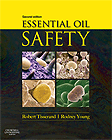
Essential Oil Safety
Own Safety Profiles for 400 Essential Oils and 206 Constituents
Authors: Robert Tisserand and Rodney Young
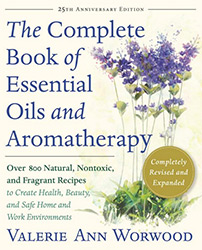
The Complete Book Of Essential Oils & Aromatherapy
Includes 125 Essential Oil Profiles
Author: Valerie Ann Worwood
Visit AromaWeb's Books area to find details about many other essential oil and aromatherapy books.
