
Damiana Essential Oil
Turnera diffusa
Description
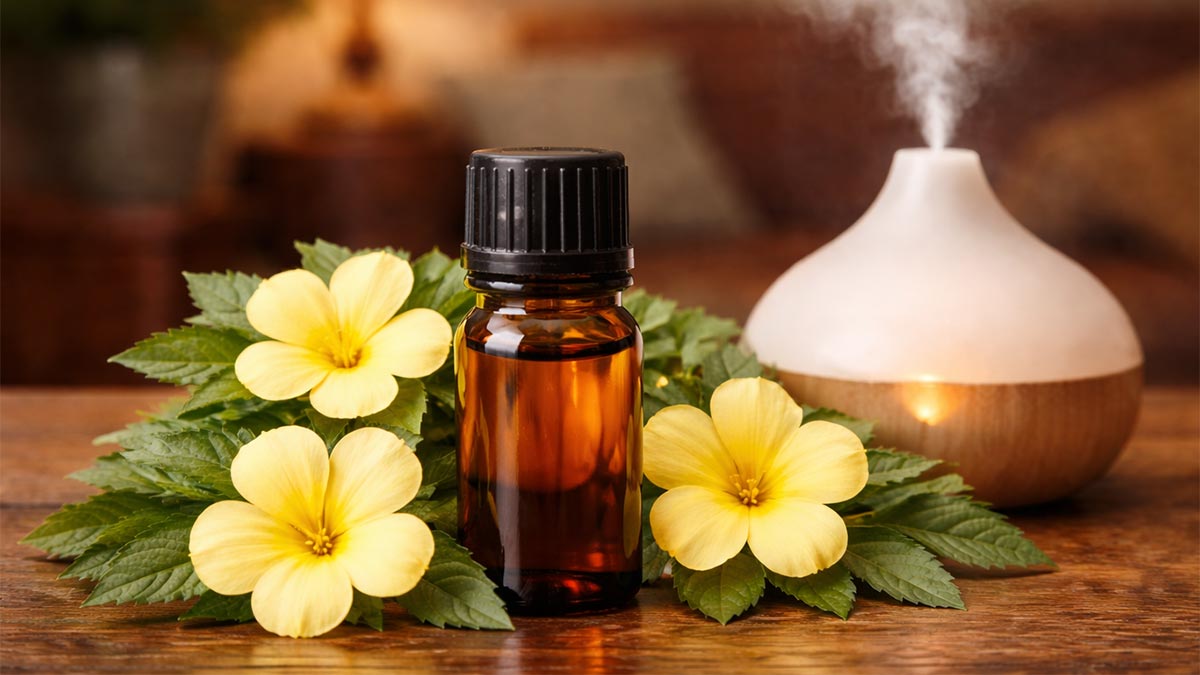
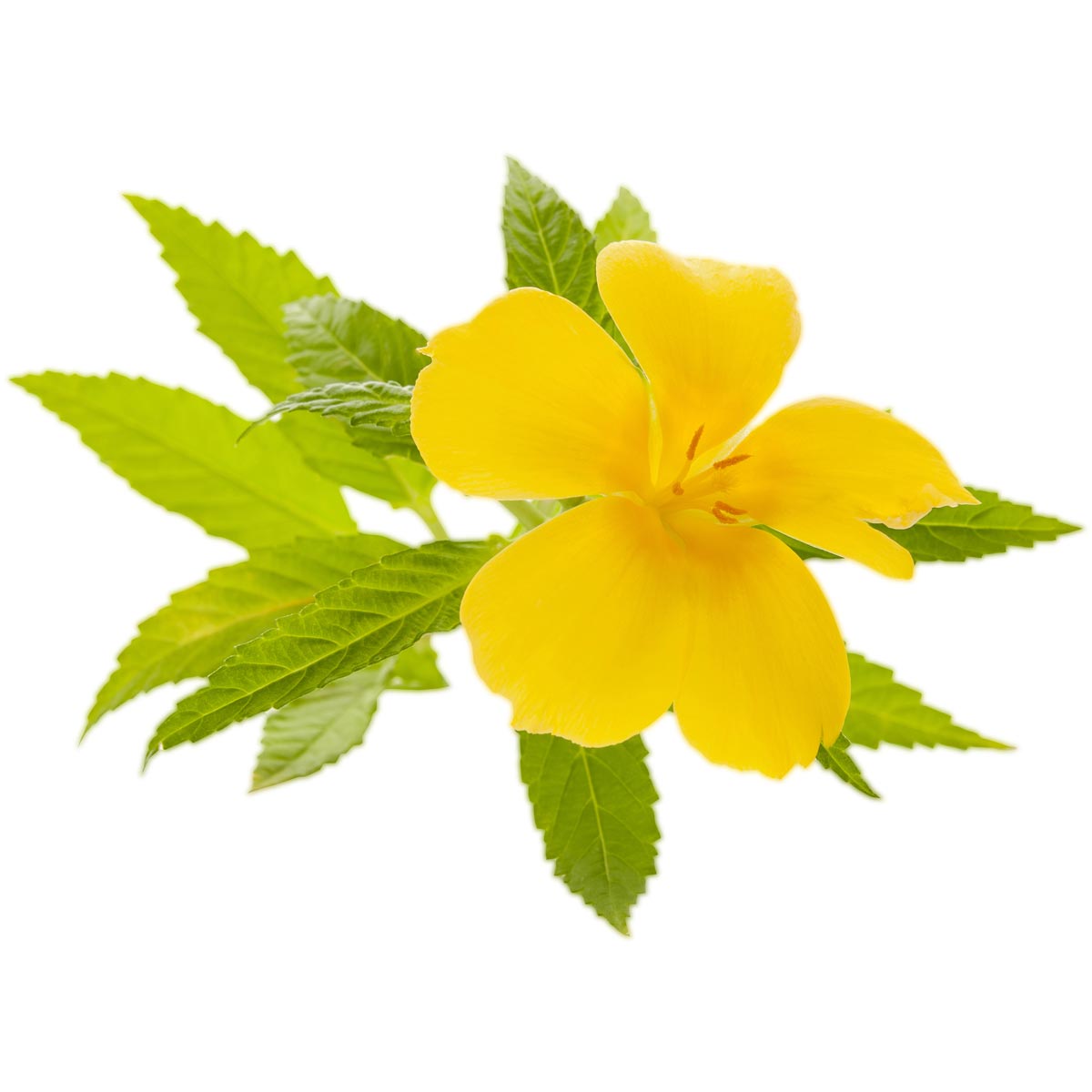
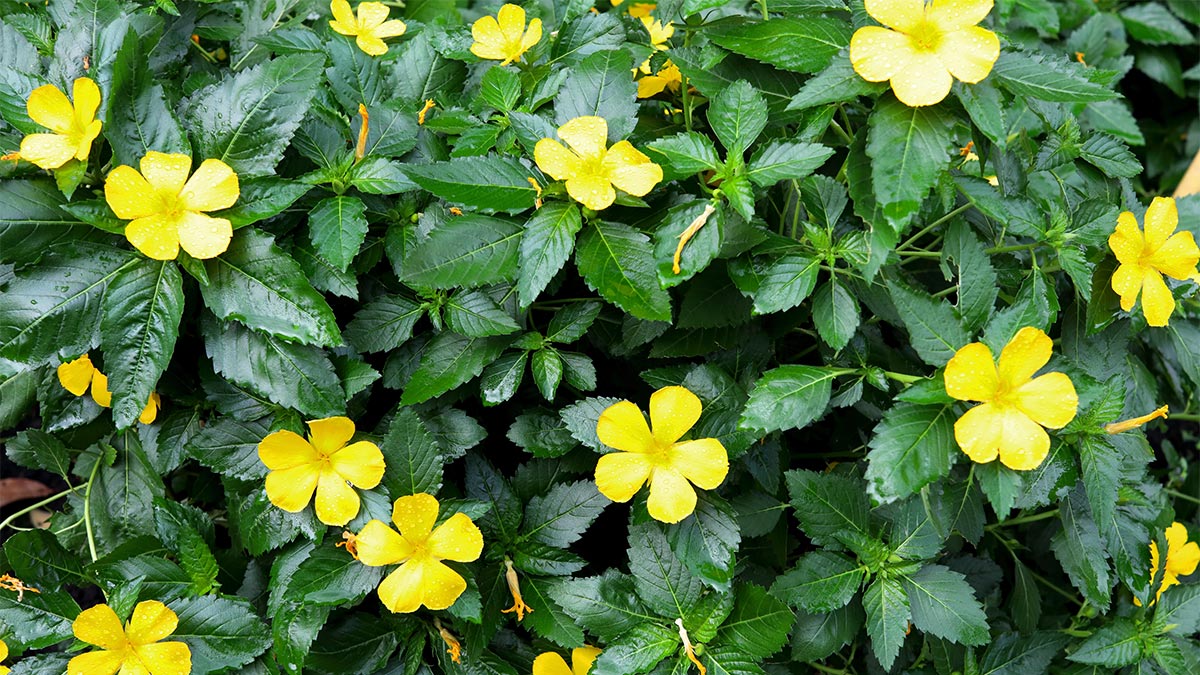
Damiana Essential Oil is steam distilled from the leaves and small flowering tops of Turnera diffusa, a small, aromatic shrub best known for its beautiful yellow flowers, its long history of traditional use and its warm, sensual aroma.
The damiana plant is native to Mexico, Central America and parts of the Caribbean, where it thrives in dry, sun-drenched regions. It has been valued for centuries in herbal and aromatic traditions.
Aromatically, Damiana Essential Oil is earthy, slightly camphorous and softly sweet, with subtle woody and tea-like nuances. Its aroma is grounding yet uplifting, with a gently warming character that feels both comforting and intriguing.
If you enjoy the aromas of Snakeweed, Rabbitbrush and Sagebrush essential oils, you will likely find the aroma of Damiana Essential Oil especially intriguing.
The aroma of Damiana Essential Oil reminds me somewhat of a blend combining of 1 part Rabbitbrush Essential Oil, 1 part Eucalyptus globulus, 1 part Davana and 3 parts Amyris.
This oil is most often associated with emotional and mood-focused applications. It has traditionally been used to support relaxation, ease tension and encourage a sense of calm confidence. In aromatherapy, it offers great potential to support emotional balance and stress relief.
It is characterized by a complex chemical profile that contributes to its warm, herbaceous and subtly sweet aroma.
In many samples, ethers represent a significant portion of Damiana Essential Oil, largely due to its naturally high 1,8-cineole content. This contributes to the fresh and softly camphoraceous characteristics in the essential oil.
In addition to its cineole content, it contains a substantial proportion of sesquiterpenes and sesquiterpenols. These heavier constituents provide aromatic depth, warmth, persistence and blending versatility.
This composition helps explain Damiana Essential Oil's softly warming, grounding aroma and its traditional association with emotional and mood-focused applications.
It helps to smooth and round out the aroma of blends, and it blends harmoniously with warm, woody, resinous, floral and citrus essential oils without being overpowering. I love using it in blends intended for emotional well-being, and I also depend on it for use in my natural perfumery work.
Essential oils that it blends particularly well with include Davana, Sandalwood, Virginian Cedarwood, Patchouli, Ylang Ylang, Jasmine Absolute, Neroli, Bergamot and Sweet Orange.
Damiana Essential Oil Benefits and Uses
- Catarrh
- Respiratory Tract Irritations
- Aphrodisiac
- Astringent
- Menstrual Cramps
- Menopausal Symptoms
- Headaches
- Sexual Dysfunction
- Lack of Sexual Desire
- Stress
- Feelings of Depression
- Nervous Tension
- Nervous Exhaustion
Sources: Valerie Ann Worwood, The Complete Book of Essential Oils and Aromatherapy, 25th Anniversary Edition (Novato, CA: New World Library, 2016), 583-584. Helen Nagle-Smith, Working with Unusual Essential Oils (London and Philadelphia: Singing Dragon, 2024, 100-104.
Botanical Name
Plant Family
Common Method of Extraction
Steam Distilled
Plant Part Typically Used
Leaves and Small Flowering Tops
Color
Damiana Essential Oil is typically yellow to amber in color.
Consistency
Thin
Perfumery Note
Middle
Strength of Initial Aroma
Medium
Aromatic Description
The aroma of Damiana Essential Oil is earthy, slightly camphorous and softly sweet, with subtle woody and tea-like nuances.
Sustainability and Conservation Status
Not classified by the IUCN Red List of Threatened Species
Last Accessed: February 14, 2026
To learn more about the conservation status of essential oil bearing plants and how to use the IUCN Red List of Threatened Species, please refer to AromaWeb's Guide to Essential Oils and Sustainability.
Major Constituents of Damiana Essential Oil
- 1,8 Cineole
- B-Opoplenone
- Cadalene
- 1-epi-Cubenol
- Caryophyllene oxide
- Thymol
- Nerolidol
- Gamma-Cadinene
Source: C. Bicchi, P. Rubiolo, E.E.S. Camargo. Components of Turnera diffusa Willd. var. afrodisiaca (Ward) Urb. essential oil. (Flavor & Fragrance Journal 18, 2003), 59-61. Source cited in Robert Tisserand and Rodney Young, Essential Oil Safety (Second Edition. United Kingdom: Churchill Livingstone Elsevier, 2014), 267.
Damiana Essential Oil Safety Information
According to Essential Oil Safety by Robert Tisserand, Damiana Essential Oil may be used dermally at concentrations up to 30%. This guideline is based on the oil's approximate 0.4% estragole content and the established dermal maximum of 0.12% for estragole. At a 30% dilution, the resulting estragole exposure remains within recommended safety limits. Reading Tisserand and Young's full safety profile for Damiana Essential Oil is recommended.
Source: Robert Tisserand and Rodney Young, Essential Oil Safety (Second Edition. United Kingdom: Churchill Livingstone Elsevier, 2014), 267.
Damiana Essential Oil References
- Valerie Ann Worwood, The Complete Book of Essential Oils and Aromatherapy, 25th Anniversary Edition (Novato, CA: New World Library, 2016), 583-584.
- Helen Nagle-Smith, Working with Unusual Essential Oils (London and Philadelphia: Singing Dragon, 2024), 100-104.
- Robert Tisserand and Rodney Young, Essential Oil Safety (Second Edition. United Kingdom: Churchill Livingstone Elsevier, 2014), 267.
General Safety Information
Do not take any oils internally and do not apply undiluted essential oils, absolutes, CO2s or other concentrated essences onto the skin without advanced essential oil knowledge or consultation from a qualified aromatherapy practitioner. For general dilution information, read AromaWeb's Guide to Diluting Essential Oils. If you are pregnant, epileptic, have liver damage, have cancer, or have any other medical problem, use oils only under the proper guidance of a qualified aromatherapy practitioner. Use extreme caution when using oils with children and be sure to first read the recommended dilution ratios for children. Consult a qualified aromatherapy practitioner before using oils with children, the elderly, if you have medical issues or are taking medications. Before using this or any essential oil, carefully read AromaWeb's Essential Oil Safety Information page. For in-depth information on oil safety issues, read Essential Oil Safety by Robert Tisserand and Rodney Young.
Shelf Life
Important Information About the Profiles
The essential oil information provided on AromaWeb is intended for basic educational purposes only. The references to safety information, test results, constituents and percentages is generalized information. Essential oils can vary greatly in composition. The data is not necessarily complete and is not guaranteed to be accurate. The essential oil photos are intended to represent the typical and approximate color of each essential oil. However, essential oil composition and color can vary based on harvesting, distillation, age of the essential oil and other factors. Profiles for several CO2 Extracts and absolutes are included within the directory, and are denoted as such.
Essential Oil Book Suggestions
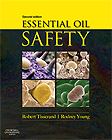
Essential Oil Safety
Own Safety Profiles for 400 Essential Oils and 206 Constituents
Authors: Robert Tisserand and Rodney Young
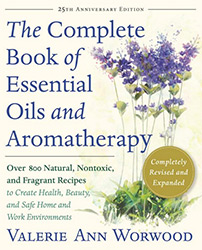
The Complete Book Of Essential Oils & Aromatherapy
Includes 125 Essential Oil Profiles
Author: Valerie Ann Worwood
Visit AromaWeb's Books area to find details about many other essential oil and aromatherapy books.
