
What are Floral Waxes?
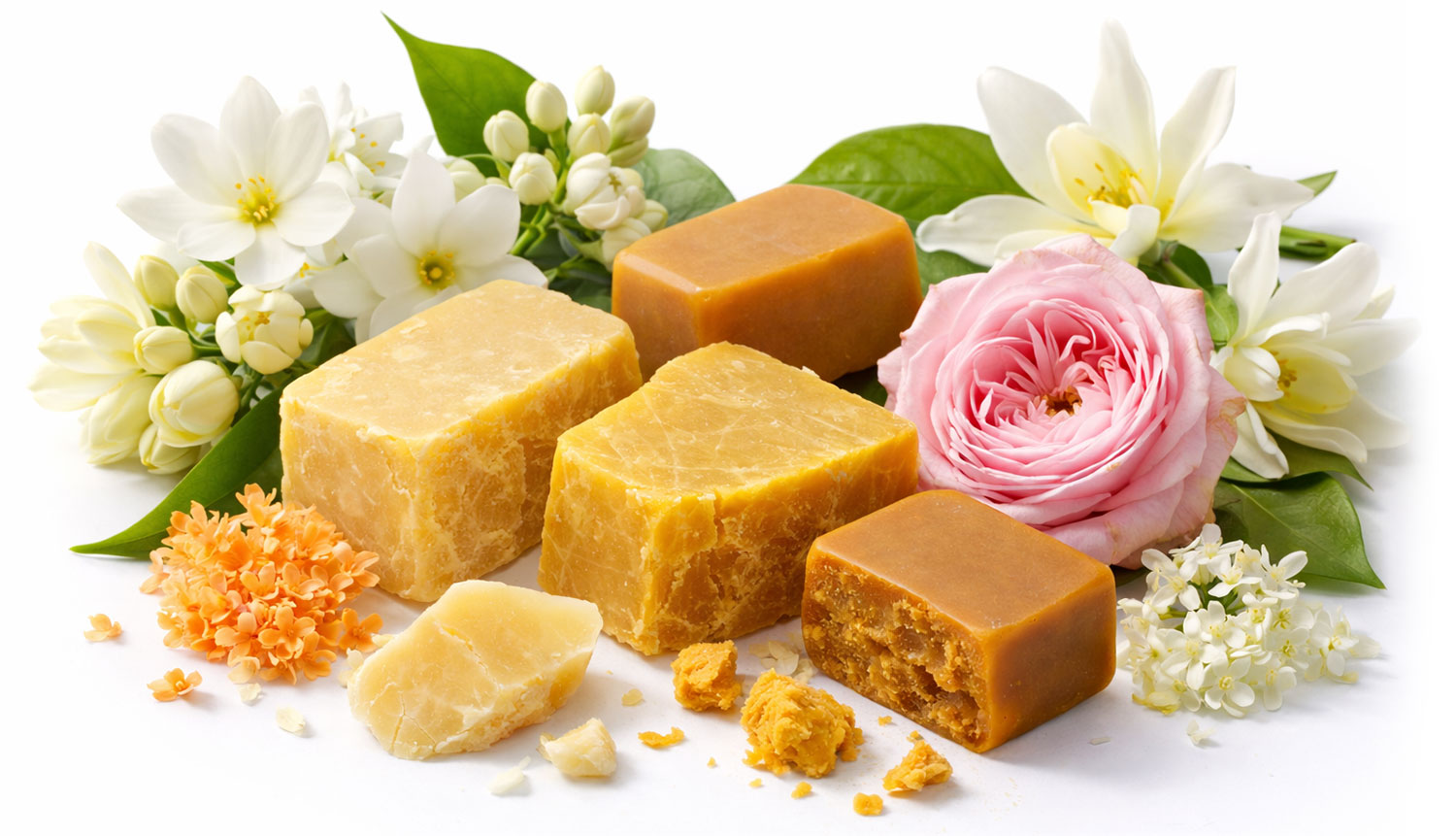
Floral waxes are natural, aromatic materials that are created as a byproduct during the production of floral concretes and absolutes.
When delicate flowers such as jasmine, rose, tuberose or osmanthus are processed using solvents to produce absolutes and other aromatic materials, a waxy substance is also separated out.
This substance is known as floral wax.
Characteristics of Floral Waxes
Floral wax retains much of the aroma of the plant, along with some of the heavier, non-volatile components that are not present in essential oils.
Unlike essential oils and absolutes, floral waxes are solid at room temperature and typically have a firm, somewhat brittle texture.
Their color is usually golden, brown or even dark amber depending on the botanical source.
Their aroma is generally representative of the flower, but is often deeper and softer in intensity.
Typical Floral Waxes
Floral waxes are available from a variety of botanical sources, most often derived from highly aromatic flowers used in the production of concretes and absolutes. Some of the more commonly encountered floral waxes include:
- Jasmine (Jasminum grandiflorum and Jasminum sambac)
- Lotus (Nelumbo nucifera)
- Magnolia (Michelia alba)
- Mimosa (Acacia decurrens)
- Osmanthus (Osmanthus fragrans)
- Rose (Rosa damascena and Rosa centifolia)
- Tuberose (Polianthes tuberosa)
- Violet Leaf (Viola odorata)
Uses of Floral Waxes
Floral waxes are valued for both their aroma and their functional properties.
In skincare and cosmetic formulations, they can help add body and texture to products such as balms, salves and creams.
They also contribute a subtle, natural fragrance. Because they are derived directly from botanical material, they are often appreciated by those seeking more plant-based or minimally processed ingredients.
They can be incorporated into solid perfumes, lotions, creams and body butters.
Some aromatherapists and formulators use floral waxes in place of beeswax to produce vegan products.
Floral Wax Summary
Overall, floral waxes offer both aroma and function, providing both sensory enjoyment and practical benefits in formulation.
