
Herbal Tincture Recipe for Aromatherapy and Skin Care
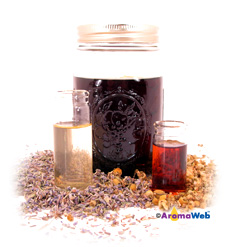
This photo shows the visual difference between tinctures made from fresh and dried herbs. The mason jar contains a tincture that I made using dried lavender buds. The large vial on the left contains tincture that I made using fresh lavender. The small vial on the right contains a tincture that I made using dried chamomile.
Each year, I grow a variety of herbs for culinary and aromatic uses. I'm gearing up for summer and once again having lots of fresh herbs on hand.
I enjoy using room mists and linen sprays. They're inexpensive and a great way to easily enjoy aromatherapy and natural plant based aromatics on a daily basis. See the categorized listing of recipes in AromaWeb's Recipe Box for recipe ideas. I sometimes use homemade liquid herbal tinctures in place of some of the alcohol or water that a recipe calls for to naturally fragrance my room sprays. Properly stored herbal tinctures last a couple years are a wonderful way to enjoy the benefits of the herbs I grow year round. Dried herbs can also be used and usually result in an even more concentrated extract.
I use herbal tinctures primarily for room fragrancing applications. Feel free to research other ways that you can use them. Be sure you research and heed all safely precautions.
Ingredients, Packaging & Supplies
- Air tight, sterilized glass containers
- Enough chopped fresh herbs to fill each container halfway
- Dried herbs can be used instead to make more concentrated herbal tinctures
- High proof vodka. Everclear can also be used if it is legally available for purchase in your locale.
- Cheesecloth or a fine grade strainer
Instructions
- Chop your fresh herbs so that they naturally begin to release their aromatic oils.
- Place your herbs in each container using the measuring guidelines shown above.
- Fill with alcohol. Allow enough room at the top to ensure that there is room for the alcohol and herbs to mix well when shaken.
- Store in a cool, dry, dark area. Shake each container at least once per day for 30 days. Strain the tincture with layered cheesecloth or a fine grade strainer.
The tincture can be used at this stage, but you will achieve a more concentrated and aromatic tincture if you repeat the process by adding more fresh or dried herbs and again shaking each container once per day for 30 days. Once again, strain the herbs from the tincture. Your tincture is now ready to use. See the categorized listing of recipes in AromaWeb's Recipe Box for recipe ideas.
What is the Difference Between a Tincture and an Extract?
The terms are often used interchangeably. An herbal extract generally refers to both powdered and liquid herbal concentrates. A tincture is a liquid herbal extract made with alcohol as the solvent. Glycerin can be used as the solvent in place of alcohol. Glycerin based tinctures, however, do not last indefinitely and are not as convenient for use in personal care applications. Glycerin based tinctures, are best suited for use in personal care applications that normally work well with glycerin as an ingredient (i.e. salt/sugar scrubs and mouth rinses).
Safety
Be sure to stick to herbs that are known to be safe for use in the applications that you want to use them in. Since AromaWeb/AromaTalk focuses upon the use of essential oils and not herbal tinctures, it is your responsibility to do added research regarding the type of herbal tincture that you want to make and research additional safety information applying to the specific tincture.
Isn't There a Trend Towards Limiting Products that Contain Alcohol?
Absolutely. Alcohol can be especially drying to the skin for example, and should be mindfully used. The type of alcohol used in products matters. If denatured alcohol is used, the ingredients used to make the alcohol unfit for consumption can potentially be harmful when used. Plus, the aroma of denatured alcohol will interfere with the aroma of your natural aromatics. I occasionally will purchase household or skin care products that contain limited quantities of alcohol from quality-conscious artisans/small manufacturers. I use these products in moderation.
General Safety Information
These recipes are offered for educational purposes only. Before using any essential oil, carefully read AromaWeb's Essential Oil Safety Information page. For in-depth information on oil safety issues, read Essential Oil Safety by Robert Tisserand and Rodney Young. Do not take any oils internally and do not apply undiluted essential oils, absolutes, CO2s or other concentrated essences onto the skin without advanced essential oil knowledge or consultation from a qualified aromatherapy practitioner. For general dilution information, read AromaWeb's Guide to Diluting Essential Oils. If you are pregnant, epileptic, have liver damage, have cancer, or have any other medical problem, use oils only under the proper guidance of a qualified aromatherapy practitioner. Use extreme caution when using oils with children and consult a qualified aromatherapy practitioner before using oils with children, the elderly, if you have medical issues or are taking medications.
Do You Need the Ingredients Listed in This Recipe?
You can find the essential oils, other ingredients and packaging that you need by patronizing the fine companies that support AromaWeb with their banner advertising located throughout AromaWeb (See them all at a glance within the Advertiser Spotlight area) and the listings located within the Aromatherapy Business Directory. Many of AromaWeb's advertisers also expertly formulate their own ready-made products if you decide you'd rather not make aromatherapy products yourself.
Do You Want More Essential Oil Recipes and Blends?
Over 800 Recipes!
The Complete Book Of Essential Oils & Aromatherapy
Author: Valerie Ann Worwood
Over 100 Recipes!
The Heart of Aromatherapy
Author: Andrea Butje
100 Recipes!
The Aromatherapy Beauty Guide
Using the Science of Carrier & Essential Oils to Create Natural Personal Care Products
Author: Danielle Sade, BSc, CAHP
Visit AromaWeb's Books area to find details about many other essential oil and aromatherapy books.