Sweet Orange Essential Oil
Citrus sinensis
Sweet Orange Essential Oil Profile Contents:
- Introduction
- Sweet Orange vs. Bitter Orange Safety Concern
- Fun Facts About the Cold Pressing of Sweet Orange Essential Oil
- Sweet Orange Essential Oil Benefits and Uses
- Aromatic Description
- Perfumery Note
- Strength of Initial Aroma
- Sweet Orange Essential Oil Blends Well With These Oils
- Color
- Consistency
- Botanical Name
- Plant Family
- Common Method of Extraction
- Plant Part Typically Used
- Sustainability and Conservation Status
- Major Constituents of Sweet Orange Essential Oil
- Sweet Orange Essential Oil Safety Information
- Sweet Orange Essential Oil References
- General Essential Oil Safety Information
Introduction
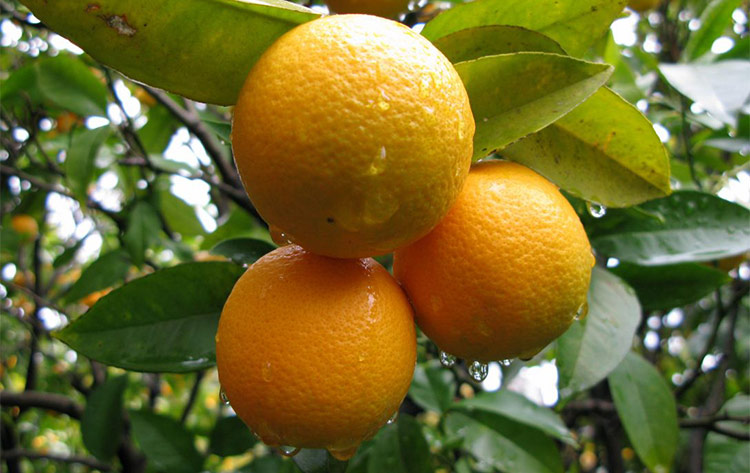
With its versatility, affordability and familiar citrus aroma, Sweet Orange Essential Oil is one of the most popular essential oils used within aromatherapy. It is typically cold pressed from the rind of the sweet orange fruit and has a bright, sweet, fresh orange aroma.
Aromatically, Sweet Orange Essential Oil is a top note that blends well with a wide range of other essential oils. It can soften heavier aromas, brighten blends and add a familiar citrus character without the sharpness associated with some other citrus oils.
Sweet Orange Essential Oil is especially rich in d-limonene. Published analyses commonly report limonene at approximately 90-97% of Citrus sinensis peel essential oil, although the exact composition varies with cultivar, growing conditions, fruit maturity, extraction method and storage. 1
Because limonene readily oxidizes when exposed to air, Sweet Orange Essential Oil should be stored tightly capped and protected from heat and light. Oxidation products of limonene, particularly limonene hydroperoxides, can be more sensitizing than fresh limonene. 2
Its high limonene content also helps explain why orange oil is frequently used within household cleaning products. d-Limonene is used commercially as a solvent and cleaning agent. 5
Sweet Orange vs. Bitter Orange Safety Concern
Sweet Orange Essential Oil and Bitter Orange Essential Oil are different essential oils and should not be treated as interchangeable. Citrus taxonomy and naming can be complex, so check the botanical name, common name, plant part and extraction method supplied with the oil.
Within aromatherapy references, Sweet Orange Essential Oil is generally identified as Citrus sinensis. Robert Tisserand and Rodney Young indicate that Sweet Orange Essential Oil is not phototoxic. Bitter Orange peel oil, however, is phototoxic6. This distinction is important when selecting an orange oil for topical use.
Fun Facts About the Cold Pressing of Sweet Orange Essential Oil

Unlike most essential oils that are extracted using steam distillation, most citrus peel oils, including Sweet Orange Essential Oil, are produced by expression or cold pressing of the rind. Steam distilled Sweet Orange Essential Oil is also available, but it is less commonly encountered.

When you peel an orange, you may notice tiny droplets spray from the rind and a burst of orange aroma at the same time. Those aromatic droplets originate from oil glands within the peel. The next time that you peel an orange or another citrus fruit, gently press a portion of the rind between your fingers and notice how intensely aromatic the peel itself can be.
Sweet Orange Essential Oil Benefits and Uses
When I am feeling anxious, stressed or lethargic, I find the aroma of Sweet Orange Essential Oil uplifting and balancing.
There is some human research supporting the traditional aromatherapy use of Sweet Orange aroma for situational anxiety. In a controlled study involving 40 healthy male volunteers exposed to an anxiety-provoking task, the 2.5-drop and 10-drop Sweet Orange Essential Oil conditions showed an anxiolytic pattern on psychological measures compared with the control groups, although the results were not consistent across all three Sweet Orange dose groups and physiological changes were not prevented. The researchers emphasized that additional research is needed to determine its clinical relevance for anxiety disorders. 3
A separate small randomized crossover study involving 30 children during dental treatment found lower salivary cortisol and pulse rate when orange essential oil aroma was used compared with the control condition. 4
The following traditional and aromatherapy uses are cited by Julia Lawless. Inclusion in this list should not be interpreted to mean that Sweet Orange Essential Oil has been clinically proven to treat or prevent these conditions:
- Colds
- Constipation
- Dull Skin
- Flatulence
- Flu
- Gums
- Slow Digestion
- Stress
Source: Julia Lawless, The Encyclopedia of Essential Oils (Updated Edition) (London: Harper Thorsons, 2014), 153-154.
Aromatic Description
Sweet Orange Essential Oil smells fresh, citrusy, sweet and distinctly orange-like. Its aroma resembles freshly expressed orange peel, but it is more concentrated and can smell somewhat sweeter than the fruit itself.
Perfumery Note
Top
Strength of Initial Aroma
Medium - Strong
Sweet Orange Essential Oil Blends Well With These Oils
Sweet Orange Essential Oil is exceptionally versatile in aromatic blending. It blends well with many citrus, floral, herbaceous, spice, resinous and wood oils. The following are especially useful aromatic pairings:
- Lavender
- Clary Sage
- Geranium
- Neroli
- Rose
- Frankincense
- Atlas Cedarwood
- Sandalwood
- Patchouli
- Black Pepper
- Ylang Ylang
- Vanilla
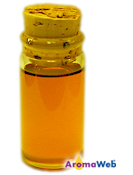
Color
Sweet Orange Essential Oil is typically pale yellow to orange in color.
Consistency
Thin
Botanical Name
Plant Family
Common Method of Extraction
Cold Pressed/Expressed
Plant Part Typically Used
Sustainability and Conservation Status
Not Evaluated by the IUCN Red List of Threatened Species
Source: IUCN Red List Search
Last Searched: February 15, 2026
To learn more about the conservation status of essential oil bearing plants and how to use the IUCN Red List of Threatened Species, please refer to AromaWeb's Guide to Essential Oils and Sustainability.
Major Constituents of Sweet Orange Essential Oil
Major Constituents of American Sweet Orange OilSweet Orange peel essential oil is typically dominated by d-limonene. Common minor constituents include beta-myrcene and alpha-pinene. The exact constituent profile varies according to the source and sample. 1
- (+)-Limonine
- B-Myrcene
- a-Pinene
See Essential Oil Safety for more complete list of typical constituents.
[B.M. Lawrence, Essential Oils 1988-1991 (Wheaton: Allured Publishing, 1995), 48-49. Source cited in Robert Tisserand and Rodney Young, Essential Oil Safety (Second Edition. United Kingdom: Churchill Livingstone Elsevier, 2014), 372.]
Sweet Orange Essential Oil Safety Information
Tisserand and Young do not indicate special precautions for fresh Sweet Orange Essential Oil, but they caution against using the oil if it has oxidized. Because limonene can oxidize during storage, keep the bottle tightly closed, protect it from heat and light and avoid using old or oxidized oil. 2
Sweet Orange Essential Oil is not considered phototoxic by Tisserand and Young. This is an important distinction from Bitter Orange Essential Oil, which is phototoxic. Always verify which orange oil you have before topical use.
Reading Tisserand and Young's full safety profile for Sweet Orange Essential Oil is recommended.
Source: Robert Tisserand and Rodney Young, Essential Oil Safety (Second Edition. United Kingdom: Churchill Livingstone Elsevier, 2014), 372.
Sweet Orange Essential Oil References
- M. Carmen Gonzalez-Mas, Jose L. Rambla, M. Pilar Lopez-Gresa, M. Amparo Blazquez and Antonio Granell, Volatile Compounds in Citrus Essential Oils: A Comprehensive Review, Frontiers in Plant Science 10 (2019): 12. doi: 10.3389/fpls.2019.00012.
- Daan Dittmar and Marie L. A. Schuttelaar, Contact Sensitization to Hydroperoxides of Limonene and Linalool: Results of Consecutive Patch Testing and Clinical Relevance, Contact Dermatitis 80, no. 2 (2019): 101-109. doi: 10.1111/cod.13137.
- Tiago Costa Goes, Fabricio Dias Antunes, Pericles Barreto Alves and Flavia Teixeira-Silva, Effect of Sweet Orange Aroma on Experimental Anxiety in Humans, Journal of Alternative and Complementary Medicine 18, no. 8 (2012): 798-804. doi: 10.1089/acm.2011.0551.
- Mehdi Jafarzadeh, Soroor Arman and Fatemeh Farahbakhsh Pour, Effect of Aromatherapy With Orange Essential Oil on Salivary Cortisol and Pulse Rate in Children During Dental Treatment: A Randomized Controlled Clinical Trial, Advanced Biomedical Research 2 (2013): 10. doi: 10.4103/2277-9175.107968.
- National Center for Biotechnology Information, PubChem Compound Summary for CID 440917, d-Limonene, including EPA-reported functional uses as a solvent and cleaning agent, accessed August 30, 2026.
- Robert Tisserand and Rodney Young, Essential Oil Safety (Second Edition. United Kingdom: Churchill Livingstone Elsevier, 2014), 87, 371-372.
- Jennifer Peace Rhind, Essential Oils: A Comprehensive Handbook for Aromatic Therapy (Third Edition. London: Singing Dragon, 2019), 594-597.
- Julia Lawless, The Encyclopedia of Essential Oils (Updated Edition) (London: Harper Thorsons, 2014), 153-154.
General Safety Information
Do not take any oils internally and do not apply undiluted essential oils, absolutes, CO2s or other concentrated essences onto the skin without advanced essential oil knowledge or consultation from a qualified aromatherapy practitioner. For general dilution information, read AromaWeb's Guide to Diluting Essential Oils. If you are pregnant, epileptic, have liver damage, have cancer, or have any other medical problem, use oils only under the proper guidance of a qualified aromatherapy practitioner. Use extreme caution when using oils with children and be sure to first read the recommended dilution ratios for children. Consult a qualified aromatherapy practitioner before using oils with children, the elderly, if you have medical issues or are taking medications. Before using this or any essential oil, carefully read AromaWeb's Essential Oil Safety Information page. For in-depth information on oil safety issues, read Essential Oil Safety by Robert Tisserand and Rodney Young.
Shelf Life
Important Information About the Profiles
The essential oil information provided on AromaWeb is intended for basic educational purposes only. The references to safety information, test results, constituents and percentages is generalized information. Essential oils can vary greatly in composition. The data is not necessarily complete and is not guaranteed to be accurate. The essential oil photos are intended to represent the typical and approximate color of each essential oil. However, essential oil composition and color can vary based on harvesting, distillation, age of the essential oil and other factors. Profiles for several CO2 Extracts and absolutes are included within the directory, and are denoted as such.
Essential Oil Book Suggestions

Essential Oil Safety
Own Safety Profiles for 400 Essential Oils and 206 Constituents
Authors: Robert Tisserand and Rodney Young
The Complete Book Of Essential Oils & Aromatherapy
Includes 125 Essential Oil Profiles
Author: Valerie Ann Worwood
Visit AromaWeb's Books area to find details about many other essential oil and aromatherapy books.