Peppermint Essential Oil
Mentha piperita
Description
The aroma of Peppermint Essential Oil is familiar and pleasant to most. Peppermint Oil is very intense and is far more concentrated than most other steam distilled essential oils. At low dilutions, it is fresh, minty and quite uplifting. Its a favorite around Christmas and the holidays, but is also popular year round.
Peppermint Essential Oil contains menthol. Menthol induces a cooling sensation, and use of Peppermint Oil (at low dilution) in a body mist or even in the diffuser can help to cool you down.
Menthol is also known to help ease tension headaches and muscular aches and pains.
If you find Peppermint Oil to be a bit too intense, you may enjoy working with Spearmint Oil. Often, I substitute Spearmint Essential Oil for some of the Peppermint Essential Oil in a blend.
Emotionally, Peppermint Essential Oil is stimulating and is a good choice for inclusion in blends intended to help enhance alertness and stamina. It is considered an aphrodisiac. Peppermint should be avoided before bedtime.
Cornmint Essential Oil is sometimes passed off as Peppermint Oil, so it is important to be careful of where you procure your oil.
Peppermint Essential Oil Benefits and Uses
- Asthma
- Colic
- Exhaustion
- Flu
- Digestion
- Flatulence
- Headache
- Nausea
- Scabies
- Sinusitis
- Vertigo
Source: Julia Lawless, The Encyclopedia of Essential Oils (Updated Edition) (London: Harper Thorsons, 2014), 139-140.
Peppermint Essnetial Oil may potentially deter rodents.
Botanical Name
Plant Family
Common Method of Extraction
Steam Distilled
Plant Part Typically Used
Color
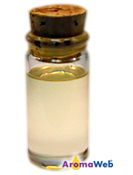
Clear with a Yellow Tinge
Consistency
Thin
Perfumery Note
Top
Strength of Initial Aroma
Strong
Aromatic Description
Peppermint Essential Oil smells intensely minty. Its aroma is reminiscent of peppermint candies, but it is more concentrated and is more intense in fragrance than Spearmint Essential Oil.
Sustainability and Conservation Status
Not Evaluated by the IUCN Red List of Threatened Species
Source: IUCN Red List Search
Last Searched: February 15, 2026
To learn more about the conservation status of essential oil bearing plants and how to use the IUCN Red List of Threatened Species, please refer to AromaWeb's Guide to Essential Oils and Sustainability.
Major Constituents
- Menthol
- Menthone
- Menthyl Acetate
- Neomenthol
- 1,8-Cineole
- Menthofuran
See Essential Oil Safety for more complete list of typical constituents and for constituent lists of ISO standardized oils..
Source: B.M. Lawrence, Essential Oils 1988-1991 (Wheaton: Allured Publishing, 1993), 31-35. B.M. Lawrence, Essential Oils 1988-1991 (Wheaton: Allured Publishing, 1995), 94-105. B.M. Lawrence, Progress in Essential Oils. (Perfumer & Flavorist 22 no. 2, 1997), 57-66. Sources cited in Robert Tisserand and Rodney Young, Essential Oil Safety (Second Edition. United Kingdom: Churchill Livingstone Elsevier, 2014), 387.
Peppermint Essential Oil Safety Information
Tisserand and Young confirm that it is low risk as a mucous membrane irritant. Peppermint Oil is choleretic and can pose a risk of neurotoxicity. They recommend a maximum dermal use level of 5.4% and state that it should be avoided in instance of cardiac fibrillation and by those with a G6PD deficiency. Do not apply near the face of infants/children. Essential Oil Safety is recommended reading for more complete information. [Robert Tisserand and Rodney Young, Essential Oil Safety (Second Edition. United Kingdom: Churchill Livingstone Elsevier, 2014), 387.]
This essential oil poses a higher risk of causing irritation and sensitization when used in the bath. Avoid using it in the bath, even if it is solubilized/diluted.
General Safety Information
Do not take any oils internally and do not apply undiluted essential oils, absolutes, CO2s or other concentrated essences onto the skin without advanced essential oil knowledge or consultation from a qualified aromatherapy practitioner. For general dilution information, read AromaWeb's Guide to Diluting Essential Oils. If you are pregnant, epileptic, have liver damage, have cancer, or have any other medical problem, use oils only under the proper guidance of a qualified aromatherapy practitioner. Use extreme caution when using oils with children and be sure to first read the recommended dilution ratios for children. Consult a qualified aromatherapy practitioner before using oils with children, the elderly, if you have medical issues or are taking medications. Before using this or any essential oil, carefully read AromaWeb's Essential Oil Safety Information page. For in-depth information on oil safety issues, read Essential Oil Safety by Robert Tisserand and Rodney Young.
Shelf Life
Important Information About the Profiles
The essential oil information provided on AromaWeb is intended for basic educational purposes only. The references to safety information, test results, constituents and percentages is generalized information. Essential oils can vary greatly in composition. The data is not necessarily complete and is not guaranteed to be accurate. The essential oil photos are intended to represent the typical and approximate color of each essential oil. However, essential oil composition and color can vary based on harvesting, distillation, age of the essential oil and other factors. Profiles for several CO2 Extracts and absolutes are included within the directory, and are denoted as such.