Myrrh Essential Oil
Commiphora myrrha
Description
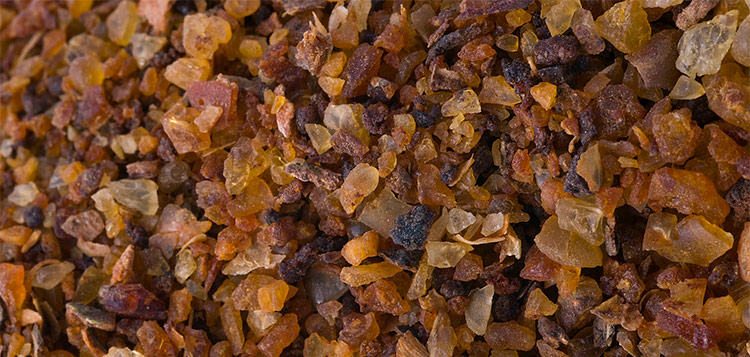
Myrrh is a tree resin that has been used and valued since ancient times for its medicinal, cosmetic, aromatic and spiritual applications. In Christianity, Gold, Frankincense and Myrrh were the gifts given to the baby Jesus by the three wise men.

Myrrh Essential Oil is used most often for spiritual and incense /room fragrancing applications, and it is heralded for its contribution to oral health. You can find toothpastes, mouth rinses and other natural oral care products that contain Myrrh Essential Oil and/or the powderized resin.
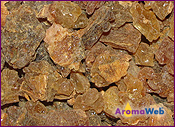
Myrrh Essential Oil is distilled directly from myrrh resin. Myrrh Essential Oil smells more pleasant than the resin, but I still find the aroma of the oil to be a bit harsh on its own. The aroma of Frankincense Oil helps to round out and freshen the aroma Myrrh Essential Oil. The aroma is woody, earthy and a bit balsamic. It is a wonderful base note to include in blends intended for spiritual, meditative and Christmas room fragrancing applications.
Emotionally, Myrrh Oil is grounding and helps to mellow out the emotions.
Read below for more information and for important safety information.
Myrrh Essential Oil Benefits and Uses
- Amenorrhea
- Athlete's Foot
- Bronchitis
- Chapped Skin
- Dysmenorrhea
- Gums
- Halitosis
- Hemorrhoids
- Itching
- Mouth
- Ringworm
- Toothache
Source: Julia Lawless, The Encyclopedia of Essential Oils (Updated Edition) (London: Harper Thorsons, 2014), 143-144.
Botanical Name
Plant Family
Common Method of Extraction
Distillation
Plant Part Typically Used
Color
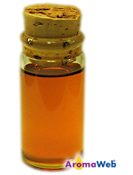
Golden Yellow/Brown
Consistency
Medium
Perfumery Note
Base
Strength of Initial Aroma
Medium - Strong
Aromatic Description
Myrrh Essential Oil smells warm, earthy, woody and balsamic.
Sustainability and Conservation Status
Not Evaluated by the IUCN Red List of Threatened Species
Source: IUCN Red List Search
Last Searched: February 15, 2026
To learn more about the conservation status of essential oil bearing plants and how to use the IUCN Red List of Threatened Species, please refer to AromaWeb's Guide to Essential Oils and Sustainability.
Major Constituents
- Furanoeudesma-1,3-diene
- Furanodiene
- Lindestrene
- B-Elemene
- Germacrene B
- Geracrene D
- Delta-Elemene
- 2-Methoxyfuranodiene
See Essential Oil Safety for more complete list of typical constituents.
Source: A. Dekebo, E. Dagne, O. Sterner. Furanosesquiterpenes from Commiphora sphaerocarpa and Related Adulterants of True Myrrh. (Fitoterapia 73, 2002), 48-55. Source cited in Robert Tisserand and Rodney Young, Essential Oil Safety (Second Edition. United Kingdom: Churchill Livingstone Elsevier, 2014), 357.
Myrrh Essential Oil Safety Information
Tisserand and Young indicate that Myrrh Oil may be fetotoxic, and thus is contraindicated in pregnancy and lactation. Reading Tisserand and Young's full profile is recommended. [Robert Tisserand and Rodney Young, Essential Oil Safety (Second Edition. United Kingdom: Churchill Livingstone Elsevier, 2014), 357.]
Myrrh CO2 Supercritical Select Extract
In addition to being available as an essential oil, this botanical is available from a small number of reputable sources as a CO2 extract. CO2 extracts offer many advantages. However, they can have differing safety precautions than essential oils because the natural chemistry of CO2 extracts can differ from their essential oil counterparts. Not much safety information is documented from trusted sources for CO2 extracts. Use CO2 extracts with great care and do not assume that every CO2 extract has the same safety precautions as its essential oil counterpart.
General Safety Information
Do not take any oils internally and do not apply undiluted essential oils, absolutes, CO2s or other concentrated essences onto the skin without advanced essential oil knowledge or consultation from a qualified aromatherapy practitioner. For general dilution information, read AromaWeb's Guide to Diluting Essential Oils. If you are pregnant, epileptic, have liver damage, have cancer, or have any other medical problem, use oils only under the proper guidance of a qualified aromatherapy practitioner. Use extreme caution when using oils with children and be sure to first read the recommended dilution ratios for children. Consult a qualified aromatherapy practitioner before using oils with children, the elderly, if you have medical issues or are taking medications. Before using this or any essential oil, carefully read AromaWeb's Essential Oil Safety Information page. For in-depth information on oil safety issues, read Essential Oil Safety by Robert Tisserand and Rodney Young.
Shelf Life
Important Information About the Profiles
The essential oil information provided on AromaWeb is intended for basic educational purposes only. The references to safety information, test results, constituents and percentages is generalized information. Essential oils can vary greatly in composition. The data is not necessarily complete and is not guaranteed to be accurate. The essential oil photos are intended to represent the typical and approximate color of each essential oil. However, essential oil composition and color can vary based on harvesting, distillation, age of the essential oil and other factors. Profiles for several CO2 Extracts and absolutes are included within the directory, and are denoted as such.