Lavender Essential Oil
Lavandula angustifolia / Lavandula officinalis
Description
I've seen a lot of "Top 10 Essential Oil" type lists, and Lavender Essential Oil is typically amongst the first few oils listed. Lavender Oil was the #1 favorite oil chosen by AromaWeb's visitors during the Favorite Essential Oil poll. And it's no wonder. Lavender Oil has a beautiful, versatile aroma. It is anti-bacterial and is a must-have for your first-aid kit. Its calming and sedative properties make Lavender Essential Oil a wonderful oil to help relax, fight stress and to promote sleep. And when properly diluted, it's amongst the safest of essential oils.
Lavender Essential Oil is a floral, but I've spoken with men that love the aroma, especially when combined with other oils. For men's blends, try blending Lavender Essential Oil with oils from the citrus, mint and conifer families.
Lavender Essential Oil is well known for its sedative properties and for its ability to help calm stress and anxiety and to help promote sleep. If used in excess, however, Lavender Oil can actually act as a stimulant.
Lavender Essential Oil is a great oil to use for children's minor cuts and scrapes because it is anti-bacterial, calming and is considered safe enough to use with children when diluted adequately.
I've only mentioned a few of the most common uses for Lavender Oil here. Additional uses for lavender are listed below.
If you've never smelled Lavender Essential Oil before: I still remember the moment that I first inhaled Lavender Essential Oil. I was actually a little disappointed in the aroma, and it wasn't quite what I was expecting. I was so brand new to aromatherapy at that time, and my nose had been so used to strong, synthetic commercial fragrances. But it didn't take long for me to like... and then to absolutely love Lavender Oil. I'm mentioning this to you now so that you don't hastily abandon Lavender Oil if you don't like it the moment that you first sample the aroma.
Lavender CO2 Supercritical Select Extract
In addition to being available as an essential oil, a small number of reputable sources sell Lavender CO2 Extract.
The Lavender CO2 Select Extracts that I have worked with are clear and fluid in consistency. They have a beautiful lavender fragrance that smells more like the fresh lavender buds than does Lavender Essential Oil.
CO2 Extracts offer many advantages. However, they can have differing safety precautions than essential oils because the natural chemistry of CO2 extracts can differ from their essential oil counterparts. Not much safety information is documented from trusted sources for CO2 extracts. Use CO2 extracts with great care and do not assume that every CO2 extract has the same safety precautions as its essential oil counterpart.
Lavender Absolute
Lavender Absolute is also available from some reputable suppliers. Therefore, I'll briefly mention it in this section. The Lavender Absolutes that I have worked with have come from France and have a beautiful dark green color.
The Lavender Absolutes that I have worked with have an exquisite aroma that is wonderfully suited for natural perfumery work. The depth and complexity of aroma is sublime. It's likely because the solvent extraction process that is used to create Lavender Absolute is able to capture more of the heavier molecules than the process used to steam distill Lavender Essential Oil or to extract Lavender CO2 Select Extract. CO2 Select Extracts aren't extracted under the same conditions as CO2 Total Extracts and thus CO2 Select Extracts more closely resemble their essential oil counterparts.
Steffen Arctander describes the aroma as being "very rich, sweet-herbaceous, somewhat floral odor; in dilution, it bears a close resemblance to the odor of the flowering lavender shrubs. Its woody-herby undertone and coumarin-like sweetness duplicate the odor of the botanical material far better than does the essential oil." [Source: Steffen Arctander, Perfume and Flavor Materials of Natural Origin (Reprint Edition. Elizabeth, NJ: Pathfinder., 2017), 345.]
Lavender Absolute is a beautiful aromatic oil to work with for perfumery and fragrancing applications. However, limited information and safety data is available.
Read AromaWeb's Guide to Absolutes to learn more about absolutes and how they are produced.
Lavender Essential Oil Benefits and Uses
Cognitive support and brain health. Source: Dorene Petersen, Presentation: Clinical Use of Aromatherapy for Brain Health: 7 Essential Oils. August 9, 2017, New Brunswick, NJ. Alliance of International Aromatherapists 2017 Conference. AIA 2017 Conference Proceedings page 221-222.
- Acne
- Allergies
- Anxiety
- Asthma
- Athlete's Foot
- Bruises
- Burns
- Chicken Pox
- Colic
- Cuts
- Cystitis
- Depression
- Dermatitis
- Dysmenorrhea
- Earache
- Flatulence
- Headache
- Hypertension
- Insect Bites
- Insect Repellent
- Itching
- Labor Pains
- Migraine
- Oily Skin
- Rheumatism
- Scabies
- Scars
- Sores
- Sprains
- Strains
- Stress
- Stretch Marks
- Vertigo
- Whooping Cough
Source: Julia Lawless, The Encyclopedia of Essential Oils (Updated Edition) (London: Harper Thorsons, 2014), 121-122.
Botanical Name
Lavandula angustifolia / Lavandula officinalis
Plant Family
Common Method of Extraction
Steam Distilled
Plant Part Typically Used
Color
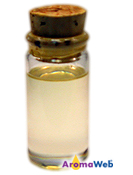
Clear with a Tinge of Yellow
Consistency
Thin
Perfumery Note
Top/Middle
Strength of Initial Aroma
Medium
Aromatic Description
Lavender Essential Oil smells floral, fresh, sweet, herbaceous and sometimes slightly fruity. It can be slightly camphorous.
Sustainability and Conservation Status
Least Concern
Source: https://www.iucnredlist.org/species/203244/2762550
To learn more about the conservation status of essential oil bearing plants and how to use the IUCN Red List of Threatened Species, please refer to AromaWeb's Guide to Essential Oils and Sustainability.
Major Constituents of Bulgarian Lavender Essential Oil
- Linalyl Acetate
- Linalool
- (Z)-B-Ocimene
- Lavandulyl acetate
- Terpinene-4-ol
- B-Caryophyllene
- (E)-B-Farnesene
- (E)-B-Ocimene
- 3-Octanyl Acetate
See Essential Oil Safety for more complete list of typical constituents.
Source: E. Schmidt, The Characteristics of Lavender Oils from Eastern Europe. (Perfumer & Flavorist 28, 2003), 48-60. Source cited in Robert Tisserand and Rodney Young, Essential Oil Safety (Second Edition. United Kingdom: Churchill Livingstone Elsevier, 2014), 326.
Lavender Essential Oil Safety Information
Tisserand and Young do not indicate any special precautions when using Lavender Essential Oil. Reading Tisserand and Young's full profile is recommended. [Robert Tisserand and Rodney Young, Essential Oil Safety (Second Edition. United Kingdom: Churchill Livingstone Elsevier, 2014), 325-328.]
Lavender Absolute Safety Information
Tisserand and Young indicate that there is a moderate risk of skin sensitization when using Lavender Absolute. They recommend a maximum dermal level of 0.1%. Reading Tisserand and Young's full profile is recommended. [Robert Tisserand and Rodney Young, Essential Oil Safety (Second Edition. United Kingdom: Churchill Livingstone Elsevier, 2014), 325-328.]
General Safety Information
Do not take any oils internally and do not apply undiluted essential oils, absolutes, CO2s or other concentrated essences onto the skin without advanced essential oil knowledge or consultation from a qualified aromatherapy practitioner. For general dilution information, read AromaWeb's Guide to Diluting Essential Oils. If you are pregnant, epileptic, have liver damage, have cancer, or have any other medical problem, use oils only under the proper guidance of a qualified aromatherapy practitioner. Use extreme caution when using oils with children and be sure to first read the recommended dilution ratios for children. Consult a qualified aromatherapy practitioner before using oils with children, the elderly, if you have medical issues or are taking medications. Before using this or any essential oil, carefully read AromaWeb's Essential Oil Safety Information page. For in-depth information on oil safety issues, read Essential Oil Safety by Robert Tisserand and Rodney Young.
Shelf Life
Important Information About the Profiles
The essential oil information provided on AromaWeb is intended for basic educational purposes only. The references to safety information, test results, constituents and percentages is generalized information. Essential oils can vary greatly in composition. The data is not necessary complete and is not guaranteed to be accurate. The essential oil photos are intended to represent the typical and approximate color of each essential oil. However, essential oil composition and color can vary based on harvesting, distillation, age of the essential oil and other factors. Profiles for several CO2 Extracts and absolutes are included within the directory, and are denoted as such.