Frankincense Essential Oil
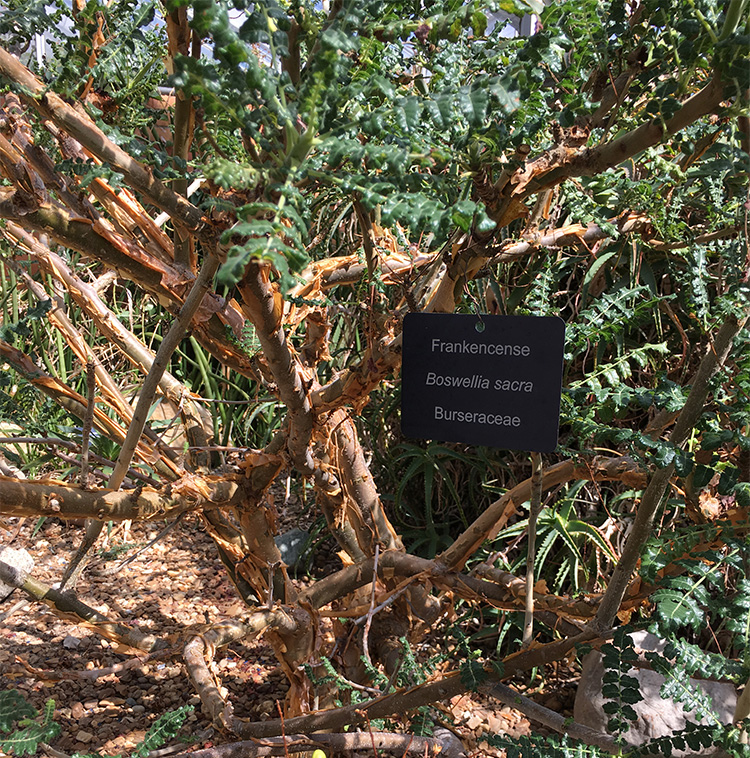
Boswellia sacra
(Synonym: Boswellia carteri)
Description
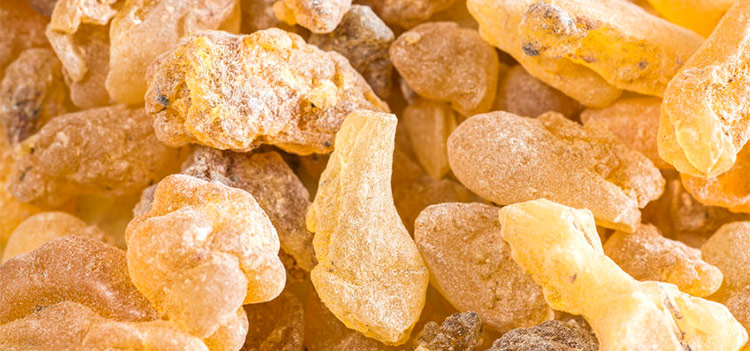
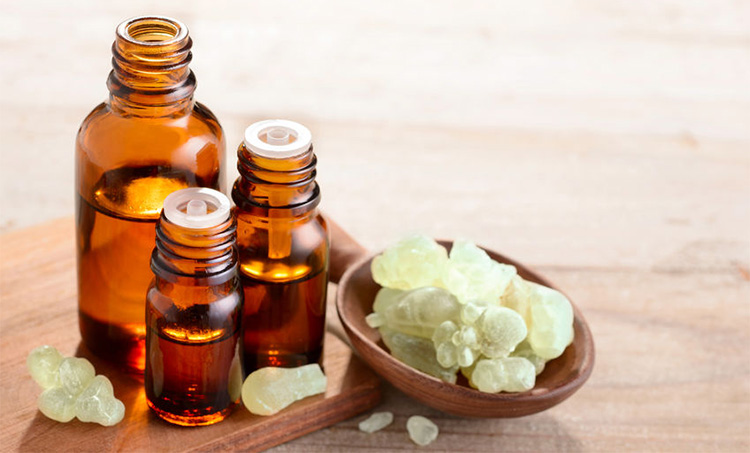
Frankincense Essential Oil is distilled from the aromatic resin of frankincense trees. The essential oil tends to smell sweeter, cleaner and fresher than the resin, and more people prefer the aroma of the essential oil to that of the resin when it is burned as incense.
Frankincense Essential Oil is used most often for spiritual, perfumery and incense /room fragrancing applications, but it is useful as an expectorant and sometimes is used in respiratory and cough formulations.

Frankincense is a tree resin that has been used and valued since ancient times as the resin produced by the tree offers numerous medicinal, cosmetic, aromatic and spiritual benefits and uses.
Emotionally, I find the aroma of Frankincense Essential Oil to be spiritually grounding, calming and relaxing without being sedating. The aroma is resinous, earthy and also has a slightly fruity/sweet, warm, spicy attitude to it.
The country of origin and quality of the frankincense tears used in Frankincense Essential Oil distillation play a big part in the overall aroma and characteristics of the essential oil.
Frankincense Essential Oil and Spirituality
I adore the aroma of Frankincense Essential Oil and include it in room fragrancing, incense and spiritual blends all year round.
I also love using Frankincense Essential Oil during meditation. Robbi Zeck shares that "Frankincense deepens and slows the rhythm of the breath, providing safe passage to the inner realms of the unconscious during meditation." [Reference: Robbi Zeck, ND, The Blossoming Heart: Aromatherapy for Healing and Transformation (Victoria, Australia: Aroma Tours, 2008), 82.]
Biblical References for Frankincense
Frankincense is mentioned in several places within the Old and New Testaments of the Bible. Many of the references to incense are believed to be references to Frankincense resin.
Shown below are three of the references to Frankincense mentioned in the Bible. These references are all likely referring to Frankincense Resin, not Frankincense Essential Oil. I have seen some people claim that Baby Jesus was given Frankincense Essential Oil by the Magi. Jesus was likely gifted with frankincense resin. Unfortunately, there are some individuals who sell essential oils that try to claim that many aromatic references in the bible are referring to essential oils. As much as I would love that to be true, it's incredibly unlikely. Please see AromaWeb's article entitled Essential Oils and the Bible for more information.
"Then the Lord said to Moses, 'Take fragrant spices - gum resin, onycha and galbanum - and pure frankincnese, all in equal amounts, and make a fragrant blend of incense, the word of a perfumer. It is to be salted and pure and sacred.'"
— Exodus 30:34-35 (NIV)
"Who is this coming up from the desert like a column of smoke, perfumed with myrrh and frankincense made from all the spices of the merchant?"
— Song of Songs 3:6 (NIV)
"On coming to the house, they saw the child with his mother Mary, and they bowed down and worshiped him. Then they opened their treasures and presented him with gifts of gold, incense and myrrh."
— Matthew 2:11 (NIV)
Species Used to Distill Frankincense Essential OIl
There are several species of Frankincense that are used to distill Frankincense Essential Oil. They share some similar therapeutic and aromatic properties (see the Uses and Benefits section below for more info). It is important to pay attention to the specific species of the Frankincense Essential OIl that you are considering purchasing, as the market value, aroma, properties and conservation status varies depending on the species.
Frankincense is also known as Olibanum.
Boswellia sacra (Synonym: Boswellia carteri)
Typical Country of Origin: Oman or Somalia*
Boswellia frereana
Typical Country of Origin: Somalia*
Boswellia serrata
Typical Country of Origin: India*
Boswellia neglecta
Typical Country of Origin: Ethiopia or Kenya*
Boswellia papyrifera
Typical Country of Origin: Ethiopia*
Boswellia rivae
Typical Country of Origin: Ethiopia*
* This oil often comes from the country listed here, but not always.
It's best to review the GC/MS report for the Frankincense Oil that you are working with or are considering purchasing. Based upon the GC reports I have reviewed for all species, Frankincense Essential Oil, from any species, tends to range in monoterpene composition from 75-90%.
Frankincense Essential Oil Benefits and Uses
The following uses and benefits are attributed primarily to the essential oil steam distilled from Boswellia carterii:
- Anxiety
- Asthma
- Bronchitis
- Extreme Coughing
- Scars
- Stress
- Stretch Marks
Source: Julia Lawless, The Illustrated Encyclopedia of Essential Oils (Rockport, MA: Element Books, 1995), 96-97.
There is a great deal of risky and inaccurate information being propagated about the applications of Frankincense Essential Oil in cancer treatment and prevention. For more information, read Frankincense Oil and Cancer in Perspective by essential oil expert Robert Tisserand.
When researching the appplications of Frankincense Essential Oil, it's important to be sure that you are verifying the applications for the actual essential oil from reputable sources. Some sources mistakenly confuse the benefits of the essential oil with those of the infused oil or pure resin.
Botanical Name
Most Commonly Available: Boswellia carterii
Plant Family
Typical Method of Extraction
Hydro Distillation: Although many reputable authors, educators and vendors list Frankincense Essential Oil as being steam distilled, Frankincense Essential Oil is typically hydro-distilled. [Sources: Robin Schiller-Kessler CA, Admin for Frankincense Resin//And All Tree Resins, Trygve Harris, Owner and Founder of Enfleurage and Jamie Garvey, Co-Founder of Böswellness.]
Plant Part Typically Used
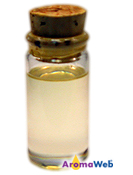
Color
Light Yellow
Consistency
Thin
Perfumery Note
Base
Strength of Initial Aroma
Mild - Medium
Aromatic Description
Frankincense Essential Oil smells fresh, woody, balsamic, slightly spicy and fruity.
Sustainability and Conservation Status
Boswellia sacra is Classified as Near Threatened
Source: https://www.iucnredlist.org/species/34533/9874201
Last Accessed: February 15, 2026
Boswellia serrata is Classified as Least Concern
Source: https://www.iucnredlist.org/species/88319078/88319196
Last Accessed: February 15, 2026
Boswellia rivae is Classified as Least Concern
Source: https://www.iucnredlist.org/species/128044164/223074935
Last Accessed: February 15, 2026
To learn more about the conservation status of essential oil bearing plants and how to use the IUCN Red List of Threatened Species, please refer to AromaWeb's Guide to Essential Oils and Sustainability.
Major Constituents of Frankincense (Boswellia carterri) Essential Oil
- a-Pinene
- a-Phellandrene
- (+)-Limonene
- B-Myrcene
- B-Pinene
- B-Caryophyllene
- p-Cymene
- Terpinen-4-ol
- Verbenone
- Sabinene
- Linalool
See Essential Oil Safety for a more complete list of typical constituents.
Source: L. Hall, Chemotaxonomical Investigation of Frankincense Producing Boswellia spp. from Somalia and a Quest for Quality Standards. (Thesis. University of Strathclyde, 2000). Source cited in Robert Tisserand and Rodney Young, Essential Oil Safety (Second Edition. United Kingdom: Churchill Livingstone Elsevier, 2014), 287-288.
Frankincense Essential Oil Safety Information
Tisserand and Young precaution to avoid use of the oil if it has oxidized. Skin sensitization is more likely when using oxidized Frankincense Oil. Reading Tisserand and Young's full profile is recommended. [Robert Tisserand and Rodney Young, Essential Oil Safety (Second Edition. United Kingdom: Churchill Livingstone Elsevier, 2014), 287-289.]
Frankincense CO2 Supercritical Select Extract (Frankincense Carteri and Frankincense Serrata)
In addition to being available as an essential oil, this botanical is available from a small number of reputable sources as a CO2 extract. CO2 extracts offer many advantages. However, they can have differing safety precautions than essential oils because the natural chemistry of CO2 extracts can differ from their essential oil counterparts. Not much safety information is documented from trusted sources for CO2 extracts. Use CO2 extracts with great care and do not assume that every CO2 extract has the same safety precautions as its essential oil counterpart.
General Safety Information
Do not take any oils internally and do not apply undiluted essential oils, absolutes, CO2s or other concentrated essences onto the skin without advanced essential oil knowledge or consultation from a qualified aromatherapy practitioner. For general dilution information, read AromaWeb's Guide to Diluting Essential Oils. If you are pregnant, epileptic, have liver damage, have cancer, or have any other medical problem, use oils only under the proper guidance of a qualified aromatherapy practitioner. Use extreme caution when using oils with children and be sure to first read the recommended dilution ratios for children. Consult a qualified aromatherapy practitioner before using oils with children, the elderly, if you have medical issues or are taking medications. Before using this or any essential oil, carefully read AromaWeb's Essential Oil Safety Information page. For in-depth information on oil safety issues, read Essential Oil Safety by Robert Tisserand and Rodney Young.
Shelf Life
Important Information About the Profiles
The essential oil information provided on AromaWeb is intended for basic educational purposes only. The references to safety information, test results, constituents and percentages is generalized information. Essential oils can vary greatly in composition. The data is not necessarily complete and is not guaranteed to be accurate. The essential oil photos are intended to represent the typical and approximate color of each essential oil. However, essential oil composition and color can vary based on harvesting, distillation, age of the essential oil and other factors. Profiles for several CO2 Extracts and absolutes are included within the directory, and are denoted as such.
Essential Oil Book Suggestions
Essential Oil Safety
Own Safety Profiles for 400 Essential Oils and 206 Constituents
Authors: Robert Tisserand and Rodney Young
The Complete Book Of Essential Oils & Aromatherapy
Includes 125 Essential Oil Profiles
Author: Valerie Ann Worwood
Visit AromaWeb's Books area to find details about many other essential oil and aromatherapy books.