Basil Essential Oil
Ocimum basilicum

Description
Basil Essential Oil is amongst the oils that I immediately think of when I want an oil that can help stimulate my mind and allow me to focus on the task at hand. Basil Essential Oil is an energizing oil and is best used during the morning and daytime hours.

Basil Essential Oil tends to be one of the first oils that I select when I have a cold. It is considered anti-bacterial/anti-viral, it acts as an expectorant and it also helps keep me alert. Basil Oil is also said to help with headaches, though it's not one I commonly use for that purpose.
The chemical composition of Basil Essential Oil can vary greatly between varieties, batches and suppliers. Ideally, look for Basil Essential Oil that has a a significant percentage of Linalool and that is weak in Methyl Chavicol (Estragole), a suspected carcinogen. Basil Oils that are higher in Linalool tend to have a more appealing aroma. Additionally, Linalool is said to act as an insect repellent.
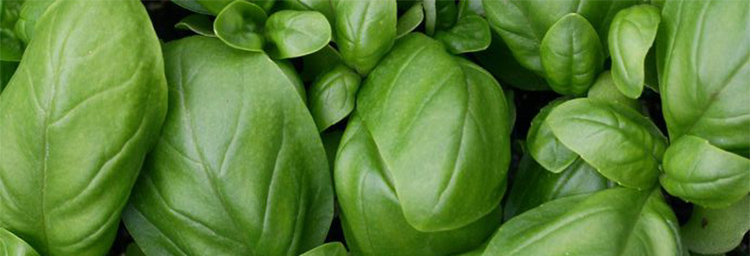
Though I love Basil, I rarely use it alone. Instead I typically enjoy the most benefit from it as a part of a synergistic blend. But beware... Basil can easily dominate a blend. Go easy on the ratio of Basil Oil that you add to blends until you are more familiar with working with it, and be sure to heed all safety precautions.
Basil Essential Oil Benefits and Uses
- Bronchitis
- Colds
- Coughs
- Exhaustion
- Flatulence
- Flu
- Gout
- Insect Bites
- Insect Repellent
- Muscle Aches
- Rheumatism
- Sinusitis
Source: Julia Lawless, The Encyclopedia of Essential Oils (Updated Edition) (London: Harper Thorsons, 2014), 45-46.
Botanical Name
Plant Family
Common Method of Extraction
Steam Distilled
Plant Part Typically Used
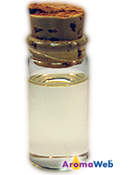
Color
Clear
Consistency
Thin
Perfumery Note
Top
Strength of Initial Aroma
Medium
Aromatic Description
Basil Essential Oil smells sweet, herbaceous and somewhat licorice-like.
Sustainability and Conservation Status
Not Evaluated by the IUCN Red List of Threatened Species
Source: IUCN Red List Search
Last Searched: February 15, 2026
To learn more about the conservation status of essential oil bearing plants and how to use the IUCN Red List of Threatened Species, please refer to AromaWeb's Guide to Essential Oils and Sustainability.
Major Constituents
- Linalool
- Fenchol
- Eugenol
- Methyl Chavicol
- Beta-Caryophyllene
Source: Shirley Price, The Aromatherapy Workbook (Hammersmith, London: Thorsons, 1993), 54-55.
Basil Essential Oil Safety Information
Use Basil Oil sparingly and with caution. High doses may be carcinogenic especially for those basils that contain a significant amount of methyl chavicol (Eugenole). Tisserand and Young suggest a dermal maximum of 15% if the estragole content does not exceed 0.8%. Reading Tisserand and Young's full profile is recommended. [Robert Tisserand and Rodney Young, Essential Oil Safety (Second Edition. United Kingdom: Churchill Livingstone Elsevier, 2014), 208.]
Avoid Basil Oil during pregnancy. [Julia Lawless, The Illustrated Encyclopedia of Essential Oils (Rockport, MA: Element Books, 1995), 186.]
General Safety Information
Do not take any oils internally and do not apply undiluted essential oils, absolutes, CO2s or other concentrated essences onto the skin without advanced essential oil knowledge or consultation from a qualified aromatherapy practitioner. For general dilution information, read AromaWeb's Guide to Diluting Essential Oils. If you are pregnant, epileptic, have liver damage, have cancer, or have any other medical problem, use oils only under the proper guidance of a qualified aromatherapy practitioner. Use extreme caution when using oils with children and be sure to first read the recommended dilution ratios for children. Consult a qualified aromatherapy practitioner before using oils with children, the elderly, if you have medical issues or are taking medications. Before using this or any essential oil, carefully read AromaWeb's Essential Oil Safety Information page. For in-depth information on oil safety issues, read Essential Oil Safety by Robert Tisserand and Rodney Young.
Shelf Life
Important Information About the Profiles
The essential oil information provided on AromaWeb is intended for basic educational purposes only. The references to safety information, test results, constituents and percentages is generalized information. Essential oils can vary greatly in composition. The data is not necessarily complete and is not guaranteed to be accurate. The essential oil photos are intended to represent the typical and approximate color of each essential oil. However, essential oil composition and color can vary based on harvesting, distillation, age of the essential oil and other factors. Profiles for several CO2 Extracts and absolutes are included within the directory, and are denoted as such.