Allspice Essential Oil
Pimenta dioica / Pimenta officinalis

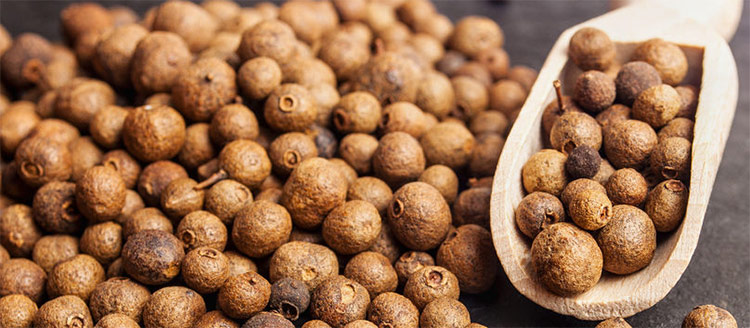
Allspice Essential Oil is also known as Pimento Berry Essential Oil.

The warm, spicy aroma of Allspice Essential Oil is similar to that of clove and cinnamon essential oils. The high content of Eugenol is partly responsible for this similarity.
Allspice Oil is a wonderful oil to use in the diffuser during the fall and winter. If used at full-strength, it can be a potent mucous membrane irritant, so it's best blended at a low ratio with other essential oils before diffusing. I particularly like Allspice Oil blended with Orange Oil or Bergamot Oil. Allspice Essential Oil's high Eugenol (a phenol) content suggests that Allspice may act as an anti-viral oil.
Allspice Essential Oil, in small dilutions, is said to act as an aphrodisiac. Its rich, warm aroma also complements masculine blends.
Although Allspice Essential Oil is regarded for its use within personal fragrancing, massage, arthritic and muscular applications, Allspice Oil can be a dermal irritant. If you choose to use Allspice Oil within topical applications, be certain to dilute it very well (see safety info shown below).
Allspice Essential Oil Benefits and Uses
- Arthritis
- Muscle Tone
- Stiffness
- Rheumatism
- Muscular And Gastric Cramps
- Indigestion
- Nausea
- Depression
- Nervous Tension/Exhaustion
- Neuralgia
- Coughs
- Bronchitis
Source: Julia Lawless, The Illustrated Encyclopedia of Essential Oils (Rockport, MA: Element Books, 1995), 60-65, 194.
Botanical Name
Pimenta dioica / Pimenta officinalis
Plant Family
Common Method of Extraction
Steam Distilled
Plant Part Typically Used
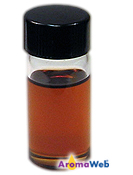
Color
Cocoa Brown
Consistency
Thin
Perfumery Note
Middle
Strength of Initial Aroma
Strong
Aromatic Description
Allspice Essential Oil smells sharp yet is sweet with a spicy, cinnamon and clove-like aroma.
Sustainability and Conservation Status
Least Concern
Source: https://www.iucnredlist.org/species/103121329/150119410
Last Accessed: February 14, 2026
To learn more about the conservation status of essential oil bearing plants and how to use the IUCN Red List of Threatened Species, please refer to AromaWeb's Guide to Essential Oils and Sustainability.
Major Constituents
- Eugenol
- 1,8-Cineole
- B-Caryophyllene
- a-Caryophyllene
- Methyleugenol
- Gamma-Cadinenel
- Caryophyllene oxide
Source: B.M. Lawrence, Essential Oils 1976-1978 (Wheaton: Allured Publishing, 1979), 72. B.M. Lawrence, Essential Oils 1988-1991 (Wheaton: Allured Publishing, 1993), 86-87. B.M. Lawrence, Essential Oils 1988-1991 (Wheaton: Allured Publishing, 1995), 184.C.L. Green, F. Espinosa, Jamaican and Central American pimento (Allspice, Pimenta dioica): Characterization of Flavor Differences and Other Distinguishing Features. (Amsterdam: Elsevier, 1988). A.O. Tucker, M.J. Maciarello, L.R. Landrun, Volatile Leaf Oils of Caribbean Myrtacea. Three Varieties of Pimenta racemosa (Miller) J. Moore of the Dominican Republic and the Commercial Bay Oil. J. Essential Oil Res. 3, 195-196. Sources cited in Robert Tisserand and Rodney Young, Essential Oil Safety (Second Edition. United Kingdom: Churchill Livingstone Elsevier, 2014), 393.
Allspice Essential Oil Safety Information
Numerous sources indicate that Allspice Oil can act as a mucous membrane irritant. Tisserand and Young recommend a dermal maximum of 0.15%. They indicate that it may interfere with blood clotting. Reading Tisserand and Young's full profile is recommended. [Robert Tisserand and Rodney Young, Essential Oil Safety (Second Edition. United Kingdom: Churchill Livingstone Elsevier, 2014), 393.]
This essential oil poses a higher risk of causing irritation and sensitization when used in the bath. Avoid using it in the bath, even if it is solubilized/diluted.
Allspice CO2 Supercritical Select Extract
In addition to being available as an essential oil, this botanical is available from a small number of reputable sources as a CO2 extract. CO2 extracts offer many advantages. However, they can have differing safety precautions than essential oils because the natural chemistry of CO2 extracts can differ from their essential oil counterparts. Not much safety information is documented from trusted sources for CO2 extracts. Use CO2 extracts with great care and do not assume that every CO2 extract has the same safety precautions as its essential oil counterpart.
General Safety Information
Do not take any oils internally and do not apply undiluted essential oils, absolutes, CO2s or other concentrated essences onto the skin without advanced essential oil knowledge or consultation from a qualified aromatherapy practitioner. For general dilution information, read AromaWeb's Guide to Diluting Essential Oils. If you are pregnant, epileptic, have liver damage, have cancer, or have any other medical problem, use oils only under the proper guidance of a qualified aromatherapy practitioner. Use extreme caution when using oils with children and be sure to first read the recommended dilution ratios for children. Consult a qualified aromatherapy practitioner before using oils with children, the elderly, if you have medical issues or are taking medications. Before using this or any essential oil, carefully read AromaWeb's Essential Oil Safety Information page. For in-depth information on oil safety issues, read Essential Oil Safety by Robert Tisserand and Rodney Young.
Shelf Life
Important Information About the Profiles
The essential oil information provided on AromaWeb is intended for basic educational purposes only. The references to safety information, test results, constituents and percentages is generalized information. Essential oils can vary greatly in composition. The data is not necessarily complete and is not guaranteed to be accurate. The essential oil photos are intended to represent the typical and approximate color of each essential oil. However, essential oil composition and color can vary based on harvesting, distillation, age of the essential oil and other factors. Profiles for several CO2 Extracts and absolutes are included within the directory, and are denoted as such.
Essential Oil Book Suggestions
Essential Oil Safety
Own Safety Profiles for 400 Essential Oils and 206 Constituents
Authors: Robert Tisserand and Rodney Young
The Complete Book Of Essential Oils & Aromatherapy
Includes 125 Essential Oil Profiles
Author: Valerie Ann Worwood
Visit AromaWeb's Books area to find details about many other essential oil and aromatherapy books.