Incense and Aromatherapy
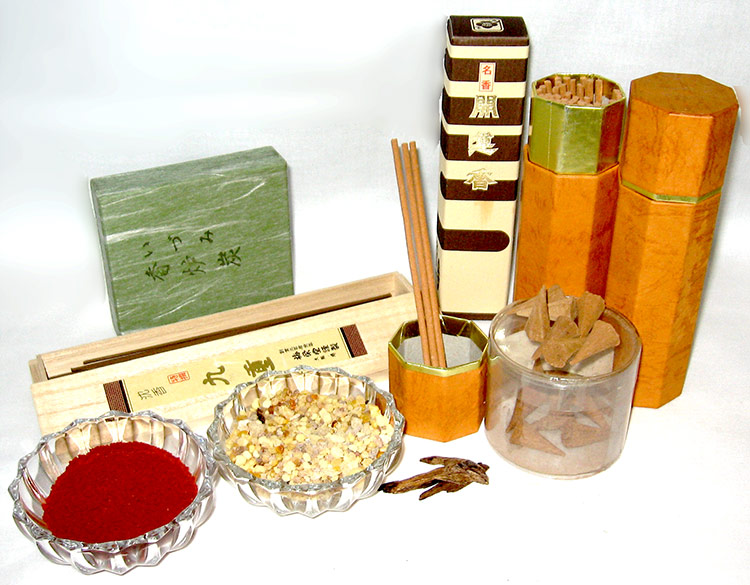
Photographed here is an array of natural, aromatic ingredients including Japanese incense, natural cones, and lose ingredients including aloeswood, red sandalwood powder and frankincense.
Natural resins, gums and herbs have been burned as incense since ancient times for its spiritual, medicinal/healing, fragrancing and odor-masking properties. More recently, essential oils have been incorporated into the mix to create natural incense.
Today, "incense" is available in a wide array of forms using both natural and synthetic ingredients. The most commonly available types of incense are synthetic and can fill the air with toxic substances when burned. Very little incense is produced using only natural aromatics and essential oils. For this reason, most incense does not hold a welcome position within the practice of holistic aromatherapy.
Natural incense, however, is available if you know where to look and can also be made at home.
This article will briefly introduce you to the different types of incense and will provide guidance on your quest to explore the delights of natural incense.
Commonly Available Forms of Incense
Dipped Incense Sticks
Dipped sticks are made with incense "blanks" which are long, thin wooden sticks that have a combustible powder coating such as charcoal or wood. The incense blanks are then dipped in either essential oils or synthetic fragrance oils, then left to dry. A variety of sources indicate that the actual incense blanks may be made with inferior pressed wood and glues that are toxic when burned. So even if using essential oils to make dipped incense, the final product, when burned, may still be toxic.
Hand Rolled Incense Sticks
Hand rolled incense is especially popular in India. The appearance of hand rolled incense is similar to that of dipped incense sticks, but the process of making the sticks is different. Hand rolled incense sticks, especially those from India, are said to be more natural than dipped incense sticks. Like with most incense, however, the handcrafters or manufacturers usually do not include a complete list of ingredients on their packaging, so the buyer must beware.
Smudge Sticks
Native Americans burn incense by tying white sage into bundles and then burning the bundles as smudge sticks. Sweet grass, juniper berries and other botanicals are also used by Native Americans to cleanse and purify the air. Read the Native American Smudging Ceremonies and Rituals article for more detailed information.
Cones
Commercially available incense cones generally contain synthetics, but all natural cones are available. Cones are made by mixing fragrant natural and/or synthetic oils and powdered ingredients with a combustible powder that helps the cones burn properly. Cones can be made at home using all natural ingredients.
Japanese Incense (Koh)
"Koh" is the Japanese word for incense. Unlike dipped or rolled incense that contains a wooden stick with combustible incense powder adhering to it, Koh is made by preparing powdered woods, resins, herbs, and oils, forming a dough-like mixture that is made into long, thin "noodles" similar to spaghetti. The long "noodles" are then cut into short sticks and allowed to dry.
Most Japanese incense that is sold does contain synthetics. Quality koh, however, is available, especially via online sources. Baieido, for instance, has been making incense since the 17th century. Baieido is the brand of Japanese incense that I purchase and find the most pleasurable. Not all Baieido incense is 100% pure, but they do offer a large selection of incense made with pure ingredients including aloeswood and sandalwood.
The finest Japanese incense is made using aloeswood and/or sandalwood. Aloeswood and sandalwood varies in grade and quality (see the Woods section below for additional information). When higher grades of aloeswood and/or sandalwood are used in a line of Japanese incense or when additional costly herbs/resins are used, expect to pay a premium price.
Loose Incense Powders
Natural incense powder can be made using powdered sandalwood, herbs and other natural ingredients. The incense powder can then be mixed with a combustible ingredient such as natural makko powder or burned on top of a charcoal tablet.
Incense powders with synthetic ingredients are also readily available. If you want to avoid synthetic powders, be sure to review all ingredients in a powder prior to purchase.
Resins
Natural resins such as frankincense, myrrh, opoponax and dragon's blood can be burned alone as incense. The general method of burning resins is by placing them on a charcoal tablet or via the Japanese Kodo Ceremony (see section below).
Woods
Aromatic woods such as aloeswood, sandalwood, cedarwood and palo santo can be burned alone. Chips or wood powders can be mixed with resins and herbs to create an incense blend. Like resins, they can be burned by setting them on top of charcoal tablets, by using a Japanese incense stove or by using the method employed as a part of the Japanese Kodo method. Because aloeswood and other woods can be costly, burning them slowly or gently heating them is best. Aloeswood is cherished for incense because it is said to promote a deep sense of peace. It, therefore, is commonly used during times of meditation.
Incense Mixtures
Resins, Woods and Powdered incense ingredients can be combined to form a loose incense mixture. Incense mixtures can be burned on top of a charcoal tablet, mixed with crushed charcoal or makko powder and burned on top of rice ash or sea salt, or burned via the methods used for the traditional Japanese Kodo Ceremony.
Japanese "Trail" Method
Incense mixtures can also be burned via the "trail method." To use this method, a wooden press called a koh press is pressed into a bowl of ash, usually white rice ash. The depression is filled with makko powder. The makko powder is then lit and loose incense ingredients are placed onto the burning makko powder as it burns along the "trail." I wouldn't be surprised if the trail method of incense burning was the inspiration that led to the creation of the popular incense "stones" that contain grooved spirals and other designs for burning synthetic incense powders.
The Japanese Kodo Method
A traditional Japanese method of slowly heating resins and woods without burning them too quickly is called the Japanese Kodo method. The process involves filling a Japenese Kodo cup with nonflammable white rice ash, burying a sulfur-free lit charcoal into the white rice ash, poking a "ventilation" hole through the ash and then setting a small mica plate on top of the ventilation hole to hold the resins or other incense ingredients.
Makko Powder
Makko is finely ground from the bark of the Makko tree. It possesses a woody aroma that does not clash or suffocate the aromas of other incense ingredients. It burns well and is a suitable, natural choice to use as the "combustible" ingredient in natural incense. It can be used within the Japanese "Trail" Method.
Making Your Own Incense at Home
Natural incense cones, sticks and loose incense mixtures can be made and enjoyed at home. Below is a basic recipe that you can use and adapt to your aromatic preferences:
- 1 part Frankincense Powder
- 1 part Myrrh Powder
- 1 part Sandalwood Powder
- 3-4 parts Makko Powder
- 4-5 Drops Essential Oil (optional)
For your first time making incense, use 1 tablespoon as the basis for 1 "part" in your recipe. That way if you are not pleased with the recipe, you will not have wasted a large batch and can easily adjust the recipe to better suit your needs next time.
Add the dry ingredients to a bowl and mix them with a spoon or fork. Very slowly add water drop by drop while mixing until you have a workable "dough." If planning to add essential oils, choose oils that compliment the aroma of the powders. Suitable choices include frankincense, sandalwood, patchouli, vetiver or orange. Add your optional essential oils and mix the dough again.
Form small cones or create handmade "sticks" by rolling them into thin 4-5" long spaghetti-like strands. They won't be perfect, especially not your first time. Set your cones and/or sticks on wax paper and allow them to dry for at least 1-2 days. I prefer to use this recipe to make sticks because the sticks tend to burn more evenly than the cones. If making cones, be sure that you keep their size small and that you form a good "point" on them. They are less likely to burn properly if they do not taper well into a small point. Handmade sticks can be burned by filling a heat resistant bowl with fine sea salt and sticking the handmade stick straight into the sea salt (make sure it is securely in place).
You can also experiment by trying other powdered herbs. Be sure to only use herbs that are not toxic when burned.
If you find that your incense does not burn properly, your incense may not have had enough time to dry or there may not be enough makko powder in your recipe.
Incense and Spirituality
For a brief look at how incense is used within spiritual applications, read AromaWeb's Incense and Spirituality article.
Making Your Own Incense
I discovered this brief but helpful 32-page book after I wrote this article. It contains a lot of useful tips about making natural incense. Some of the info regarding essential oils isn't as thorough or as accurate as I would hope for, but those with a sound knowledge of essential oils should be able to still utilize many of the tips contained within this publication.
A Word of Caution:
This article is intended for informational purposes and not does provide complete information on how to light or burn incense safely. AromaWeb assumes no liability or responsibility for your choice to light or burn any incense or incense ingredients.