Harmful Skin Care Ingredients
Our skin is the largest organ of our body. The products and substances that we put onto our skin, depending upon its composition, can ultimately be absorbed and enter our bloodstream. Topical products have a secondary impact in that substances applied to our skin have the potential to be similatenously inhaled into the lungs during application and also if the skin is left uncovered, even if you cannot perceive their aroma. This article cannot possibly list every ingredient that is considered to be toxic or potentially harmful in skin care, but it serves as a start. A helpful dictionary of cosmetic ingredients is mentioned at the bottom of this article.
List of Harmful Skin Care Ingredients
Fragrance Oils / Perfume Oils
Fragrance oils, sometimes referred to as perfume oils, usually contain synthetic substances. Over time, some individuals become sensitive to the aroma of fragrance oils and experience headaches. Others may develop skin sensitivities/eczema to the fragrance oils contained in skin care products. Fragrance oils are typically listed as "fragrance" on ingredient labels. For more information about fragrance oils, visit AromaWeb's What are Fragrance Oils article.

Mineral Oil
Mineral oil, also known as baby oil, is a byproduct of petroleum production. Mineral oil is inexpensive and is a common ingredient in many skin care products including lotions and cosmetics. Even high end lotions and cosmetics can include mineral oil. Mineral oil, however, clogs pores and prevents the skin from breathing or eliminating toxins.
Paraffin Wax
Like mineral oil, paraffin wax is a byproduct of petroleum production and is not healthy for the skin. Paraffin wax is also the wax most commonly used in candle making. When burned, paraffin wax emits toxins that can be harmful when inhaled. See AromaWeb's Aromatherapy Candles article for more information on the ingredients you should look for in natural candles.
Dyes/Pigments
FD&C and D&C dyes are synthetic and are reported to be carcinogenic. They also may cause skin sensitivity. Look for products that promote they are colored with natural botanicals including but not limited to rose petal powder, red sandalwood powder or cosmetic grade clay.

Sodium Lauryl Sulfate
Sodium Lauryl Sulfate, abbreviated SLS, is used primarily in bubble baths, shampoos, liquid soaps and other products where good lather is sought. It is even found in toothpastes. At the time of this writing, it is even used in the Tom's of Maine line of natural toothpastes - with the exception of its newer non-SLS line). SLS, however, draws moisture from the skin and can cause drying and irritation. Those with psoriasis, eczema or other skin conditions should avoid or at least limit use of products with SLS.
Propylene Glycol
Propylene glycol is still used in skin care and cosmetic products. It, however, is known to cause sensitization.
Diethanolamine
Diethanolamine, abbreviated DEA, is used for its emollient and emulsification properties. Studies have revealed that DEA is carcinogenic and should be avoided.
Isopropyl Alcohol
Isopropyl alcohol is drying and can cause sensitization. Although isopropyl alcohol can kill germs and is helpful medicinally, it should be used sparingly. For perfumery and room freshening applications, high proof vodka or perfumer's alcohol is considered acceptable to use as a very limited quantity of alcohol contacts the skin.
Flower/Floral Water
Not to be confused with hydrosols/distillate waters, floral/flower waters are waters that are scened with synthetic fragrance oils. Some manufacturers use the term hydrosol and floral water interchangeably, so be sure you're getting a natural hydrosol.
Book Recommendation
The following book is recommended as a highly useful reference to over 6,000 ingredients used in skin care, aromatherapy and cosmetic/beauty products:
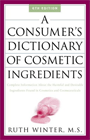
A Consumer's Dictionary of Cosmetic Ingredients, 7th Edition
Author: Ruth Winter, M.S.
Publisher: Three Rivers Press
Copyright: 2009
ISBN: 0307451119
For detailed information on what to look for when purchasing aromatherapy products, visit the How to Buy Aromatherapy Products Article.