Aromatic Plants, Aromatherapy and the Bible
The Old and New Testament books of the Bible are thought to have been written between the years 1500 B.C. and 100 A.D. Genesis is the first book of the Old Testament. It is the book that describes creation and was written by Moses around 1450 B.C. Depending upon who you consult, it is believed that the time of creation may have occurred around 4000 B.C.
The Bible is rich in references to aromatic plants, aromatic oils and anointing oils. The aromatic and anointing oils mentioned throughout the Bible were likely to be what we refer to today as infused oils, not essential oils.
Within the second edition of Essential Oil Safety, Robert Tisserand and Rodney Young state "Aromatic plants and infusions prepared from them have been employed in medicines and cosmetics for many thousands of years, but the use of distilled oils [the method used to produce essential oils] dates back only to the 10th century, when distillation as we know it today was developed." [R.J. Forbes, A Short History of the Art of Distillation, 1970. E J Brill, Leiden. As cited in Robert Tisserand and Rodney Young, Essential Oil Safety: A Guide for Health Care Professionals (Second Edition. United Kingdom: Churchill Livingstone Elsevier, 2014), 5.]
Infused Oils
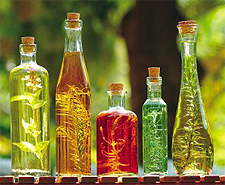
Infused oils are carrier oils (vegetable oils) that have been infused with with one or more botanicals. The infused oil contains the aromatic and the therapeutic properties of both the carrier oil and the herbs that were infused into the oil.
AromaWeb's What are Infused Oils? article describes Infused Oils in more detail and explains how you can make your own infused oils at home.
Infused oils were used in spiritual practices for the anointing and blessing of individuals as well as for a basis for men's and women's fragrancing of the hair and body.
Anointing Oils
In Biblical times, anointing oils were made using pure vegetable oils that were typically infused with botanicals. Anointing oils are used to bless and purify a person or an object. Today, anointing oils are still used and are often made in the same manner. Essential oils can also be added to a carrier oil to create a sacred anointing oil.
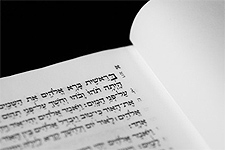
Exodus 30:22-31 (NIV) includes an anointing oil recipe and describes using it to anoint both an individual and object:
"Then the Lord said to Moses, 'Take the following fine spices: 500 shekels of liquid myrrh, half as much (that is, 250 shekels) of fragrant cinnamon, 250 shekels of fragrant cane, 500 shekels of cassia — all according to the sanctuary shekel — and a hin of olive oil. Make these into a sacred anointing oil, a fragrant blend, the work of a perfumer. It will be the sacred anointing oil. Then use it to anoint the Tent of Meeting, the ark of the Testimony, the table and all its articles, the lampstand and its accessories, the altar of incense, the altar of burnt offerings and all its utensils, and the basin with its stand. You shall consecrate them so they will be most holy, and whatever touches them will be holy. Anoint Aaron and his sons and consecrate them so they may serve me as priests. Say to the Israelites, 'This is to be my sacred anointing oil for the generations to come...'"
1 Samuel 10:1 (NIV) describes how the anointing oil is applied:
"Then Samuel took a flast of oil and poured it on Saul's head and kissed him saying, 'Has not the Lord anointed you leader over his inheritance?'"
1 Samuel 16:12-13 (NIV) tells of the initial anointing of David:
"The the Lord said, 'Rise and anoint him; he is the one.' So Samuel took the horn of oil and anointed him in the presence of his brothers, and from that day of the Spirit of the Lord came upon David in power."
Genesis 35:14 (NIV) describes Jacob pouring oil onto a pillar (the anointing of an object):
"Jacob set up a stone pillar at the place where God had talked with him, and he poured out a drink offering on it; he also poured oil on it. Jacob called the place where God had talked with him Bethel."
Luke 7: 36-38 shares how a woman, in tears over her sin, applies fragranced oil to Christ's feet:
"Now one of the Pharisees invited Jesus to have dinner with him, so He went to the Pharisee's house and reclined at the table. When a woman who had lived a sinful life in that town learned that Jesus was eating at the Pharisee's house, she brought an alabaster jar of perfume, and as she stood behind him at His feet weeping, she began to wet his feet with her tears. Then she wiped them with her hair, kissed them and poured perfume on them."
Some debate exists over this story, but it's believed that this woman sought to seek forgiveness and bless (anoint) Christ. Regardless, this story reflects the honest and loving desire of this repentant woman to respectfully bless Jesus' feet. This story also shows that anointing of not only the head, but also the feet was preferred at that time. Speculation exists to what type of "perfume" was used by this woman to anoint Jesus' feet. It is likely that she used a very costly virgin olive oil that was fragranced with myrrh or other costly botanicals. It is said that the oil she used was quite precious and may have cost up to a year's salary.
For more information about anointing oils and for recipes for creating your own anointing oils, refer to Aromatherapy Anointing Oils: Spiritual Blessings, Ceremonies & Affirmations by Joni Keim Loughran and Rual Bull.
Perfumes/Fragrancing
"But thanks be to God, who always leads us in triumphal procession in Christ and through us spreads everywhere the fragrance of the knowledge of Him."
— 2 Corinthians 2:14 (NIV)
Aromatic botanicals and infused oils were also widely used for more secular reasons:

To Enhance Romance and Sensuality
The use of naturally fragrant botanicals to heighten attractiveness and enhance romance has been documented throughout history. The Old Testament book known as the Song of Songs, for instance, was written over 3,000 years ago by Israel's King Solomon, son of King David. King Solomon was considered an immensely wise, wealthy and passionate ruler. Also known as the Song of Solomon, the Song of Songs is a beautifully poetic and symbolic Old Testament work that expresses the love shared between the king and his bride. This ancient but brief book is rich in sensual passages that reference aromatic botanicals. Read the introduction to AromaWeb's Aromatherapy for Romance article for related information and for a glimpse of the particular passages that King Solomon write.
To Camouflage Unpleasant Body Odors
In ancient times, individuals did not bathe as frequently as we do today. To mask body odor, aromatic infused oils were used, often in large quantity.
To Suggest Social Status
Infused oils and aromatic botanicals were luxury items often only available to the wealthy and upper class. Use of infused oils, aromatic botanicals and perfumes demonstrated one's social status.
Incense
Incense is described throughout the bible. Initial references occur in Exodus:
"Aaron must burn fragrant incense on the altar every morning when he tends the lamps. He must burn incense again when he lights the lamps at twilight so incense will burn regularly before the Lord for the generations to come."
— Exodus 30:7-8 (NIV)"Then the Lord said to Moses, 'Take fragrant spices — gum resin, onycha and galbanum — and pure frankincense, all in equal amounts, and make a fragrant blend of incense, the work of a perfumer.'"
— Exodus 30:34-35 (NIV)
Incense of Biblical days is not the typical incense "sticks" or "cones" that most westerners are familiar with. The incense consisted of loose aromatic botanicals. Aromatic botanicals used as incense during Biblical times are thought to include the following:
- Agarwood (Also known as Aloeswood and Oud)
- Cassia
- Cedarwood
- Cinammon
- Frankincense
- Galbanum
- Juniper
- Myrrh
- Onycha
- Saffron
For more information about natural incense, read AromaWeb's two incense articles:
For a list of biblical references to the aromatic botanicals mentioned in the bible, read AromaWeb's Aromatic Botanicals of Biblical Days article.