Tea Tree Hydrosol
Melaleuca alternifolia
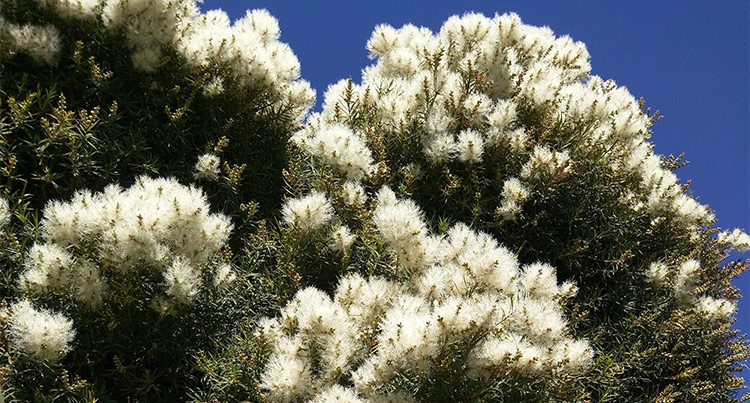
Tea Tree Hydrosol is most widely used in skincare applications.
The aroma of Tea Tree Hydrosol is somewhat similar to that of diluted Tea Tree Essential Oil, but it is lighter and fresher smelling. I find the hydrosol to be a bit less medicinal smelling than that of the essential oil.
Look to the citations from hydrosol experts Suzanne Catty and Len and Shirley Price in the Uses and Applications section below for information on the potential benefits of Tea Tree Hydrosol.
Botanical Name
Melaleuca alternifolia
Aromatic Strength
Medium
Shelf Life
Up to 2 years if stored properly (refrigeration is recommended).
Reported Properties, Uses and Applications
Not surprisingly, Suzanne Catty reports that much like its essential oil counterpart, Tea Tree Hydrosol is "antiseptic, antifungal, antibacterial and antiviral." She adds that it is mucolytic and acts as an expectorant and can be helpful for congestion. Topically, she suggests its use for cleaning cuts and wounds and that it may be helpful for psoriasis and fungal infections of the nail. [Suzanne Catty, Hydrosols: The Next Aromatherapy (Rochester, VT: Healing Arts Press, 2001), 109.]
Len and Shirley Price report that the Tea Tree Hydrosol that they analyzed consists of 93-94% alcohols (this range does not include the water present in the hydrosol) and possesses the following properties: "anti-infectious, antiviral, bactericidal, decongestant, stimulating..." "antifungal, anti-irritant, antiseptic, expectorant, mucolytic." [Len Price and Shirley Price, Understanding Hydrolats: The Specific Hydrosols for Aromatherapy: A Guide for Health Professionals (London: Churchill Livingstone, 2004), 123.]
Sustainability and Conservation Status
Not Evaluated by the IUCN Red List of Threatened Species
Source: IUCN Red List Search
Last Searched: February 15, 2026
To learn more about the conservation status of essential oil and hydrosol-bearing plants and learn how to use the IUCN Red List of Threatened Species, please refer to AromaWeb's Guide to Essential Oils and Sustainability.
Safety Information
Read AromaWeb's Hydrosol Safety Guidelines.
The hydrosol information and safety precautions provided within this area are intended for educational purposes only. Neither AromaWeb, LLC nor its founder take responsibility for how you use the information provided.
Helpful Sources of Information About Tea Tree Hydrosol
Hydrosols: The Next Aromatherapy
Author: Suzanne Catty
Understanding Hydrolats: The Specific Hydrosols for Aromatherapy
Authors: Len Price and Shirley Price
Essential Waters: Hydrosols, Hydrolats & Aromatic Waters
Author: Marge Clark
Aromatic Waters: Therapeutic, Cosmetic, and Culinary Hydrosol Applications
Author: Amy Kreydin